In New York City, a tax on superexpensive second homes is a victory for Zohran Mamdani and the socialist movement and should mark the beginning of a larger project of redistribution.
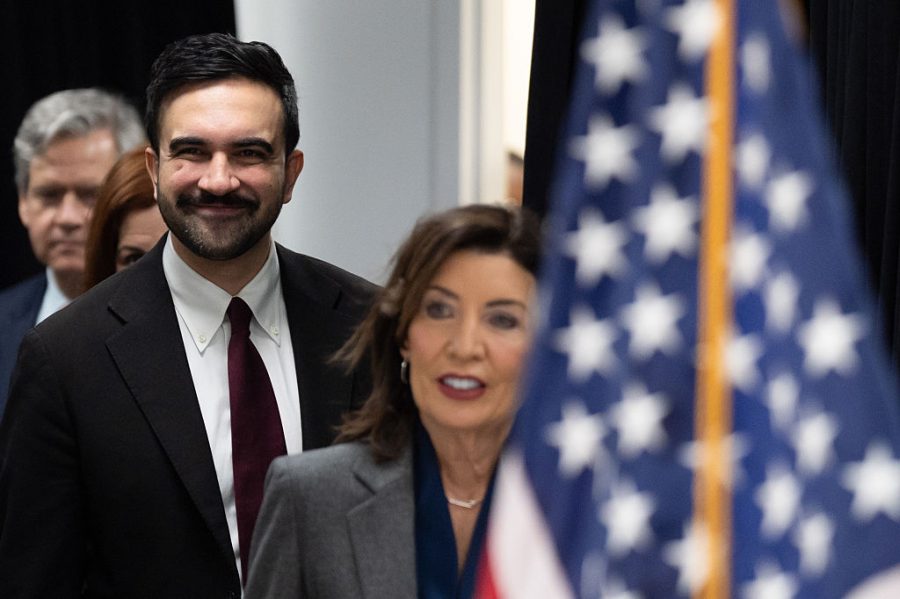
This week, democratic socialist New York City Mayor Zohran Mamdani announced, with Governor Kathy Hochul, that New York would impose a pied-à-terre tax. While the playful French phrase implies a small dwelling, it’s a misnomer in this case, since the tax only applies to houses, condominiums, and apartments valued at more than $5 million and owned by people whose primary residence is outside of New York City.
The announcement is a real victory for the socialist left and would never have happened without its tireless organizing to elect Mamdani, nor would it have happened without the campaign to “tax the rich,” which has continued since he’s been in office, as New Yorkers have rallied, lobbied, and relentlessly dogged the governor at public events. At the same time, the socialist movement is rightly viewing the new tax as a beginning rather than an end of a longer project of redistributing the city’s staggeringly unequal wealth and of building a New York where everyone can thrive.
“The governor understands that there is an organized base and an organized majority in New York City that wants to make millionaires and corporations pay what they owe,” said Gustavo Gordillo of NYC-DSA in an interview with Jacobin this week.
The move makes political sense for both Mamdani and Hochul. Taxing the rich is a broadly popular policy, and few sympathize with bloated plutocrats who hoard real estate but don’t even live in NYC. In Mamdani’s remarks on the new policy, he called out hedge fund billionaire Ken Griffin’s $238 million townhouse and emphasized the importance of taxing “the ultrawealthy and global elites” to make the city more affordable for the “working New Yorkers being priced out.” Even Kathy Hochul, a millionaire whose base is other millionaires and billionaires, knows that the governor of New York doesn’t need to curry favor with Russian oligarchs — or Ken Griffin.
They have not disclosed the rate of taxation, but Hochul and Mamdani said this week that the tax will raise half a billion dollars in revenue. Fiscal Policy Institute acting executive director and chief economist Emily Eisner said she found the half a billion number plausible, noting that the city already has well-developed mechanisms for tax collection and home value assessment. Eisner called the pied-à-terre tax “a significant material gain for the city” and a solid example of progressive taxation.
The rich themselves have reacted with predictable derangement. In a post on X, former Twitter CEO Linda Yaccarino called Mamdani’s video announcing the tax “actually the scariest thing I have seen,” and uttered gravely, “it won’t stop there.”
Let’s hope she’s right.
This tax is a long way from the sweeping income and corporate taxes that the Left has been demanding and that the city will need. “This is a first step,” said Gordillo, “but it’s ultimately just 10 percent of the budget gap we need to fill.”
“The main thing that is happening, argues Charlie Heller, a socialist political consultant and the creator of the DREAM campaign — which began last year as Don’t Rank Eric Adams, evolved into an anti-Cuomo PAC, and now focuses on taxing the rich — “is that [Donald] Trump has basically stolen $12 billion from New York state” through his tax cuts on the wealthy last year. “Instead of just taxing that money back to prevent massive cuts to health insurance, libraries, and food assistance,” Heller says, Governor Hochul is just keeping them in place. “It’s like they’re the Trump-Hochul tax cuts,” he emphasizes.
Hochul, with all her rhetoric about standing up to Trump — and to her credit, she has defeated the president on his opposition to congestion pricing — could easily frame an increase in income taxes on the ultrawealthy as a simple and needed corrective to Trump’s tax cuts, one that would preserve needed services and avert mass suffering. The rich would not be particularly inconvenienced nor, contrary to misinformation constantly peddled by both Trump and the governor, leave the city; they were after all, in residence and thriving before Trump gave them this massive windfall.
Instead, New York Focus reports that Hochul has reportedly been pressuring the mayor to make cuts to crucial city programs — including housing vouchers for low-income New Yorkers, reducing class sizes in public schools as mandated by law, and providing private school tuition to some students with disabilities — in exchange for help from the state.
The state, in much healthier fiscal shape than the city, is in a good position to provide such help. Eisner says that this year the state can afford to fund the city’s needs even without taxing the rich more. But troublingly, there does not seem to be a plan to do so, especially when it comes to the shortfalls in public health insurance or food stamps.
Eisner underscored that the state would need to tax the rich in the near future to keep city programs going in the longer run, from new programs the mayor campaigned on like universal childcare to existing needs like libraries. She says next year is when the impact of Trump’s cuts will be felt the most. At that point, taxing the rich will be needed even more.
All this organizing on taxing the rich, even if it doesn’t yield much more this year, might lay a foundation for something bigger in 2027. “It’s not hard to imagine that next year they could make some pretty significant revenue proposals,” she says.
But it’s not too late to tax the rich more this year. Budget negotiations in Albany are not over; at present lawmakers are mired in discussion on climate policy, which Hochul wants to ignore, and car insurance, her favorite topic. So there’s a long way to go before settling big questions of revenue.
Gordillo and Eisner agree that a “pass-through entity” tax, which primarily affects hedge funds and certain kinds of large law firms, might be next. That could allow the governor to raise more money without losing face; while she had vowed not to tax the rich, hedge funds, like foreigners who use the city as a place to hoard wealth, are unlikely objects of popular sympathy.
The Left will continue to demand more redistribution and revenue — income and corporate taxes. Hochul continues to insist she won’t do any of that. On the other hand, she also said that she absolutely would not tax the rich, and that anyone demanding she do it was actually cementing her resolve not to. That turned out to be false.
“You know, we were told for months that this was impossible, a quixotic campaign, that we were stupid,” Gordillo says. The socialist movement has “proven these establishment politicos wrong again.”