NDP leadership candidate Avi Lewis says socialism, defined by bold public solutions, not managerial caution, can rebuild the party after historic losses. He’s betting it can unite a majority across divided regions and broaden the party’s coalition.
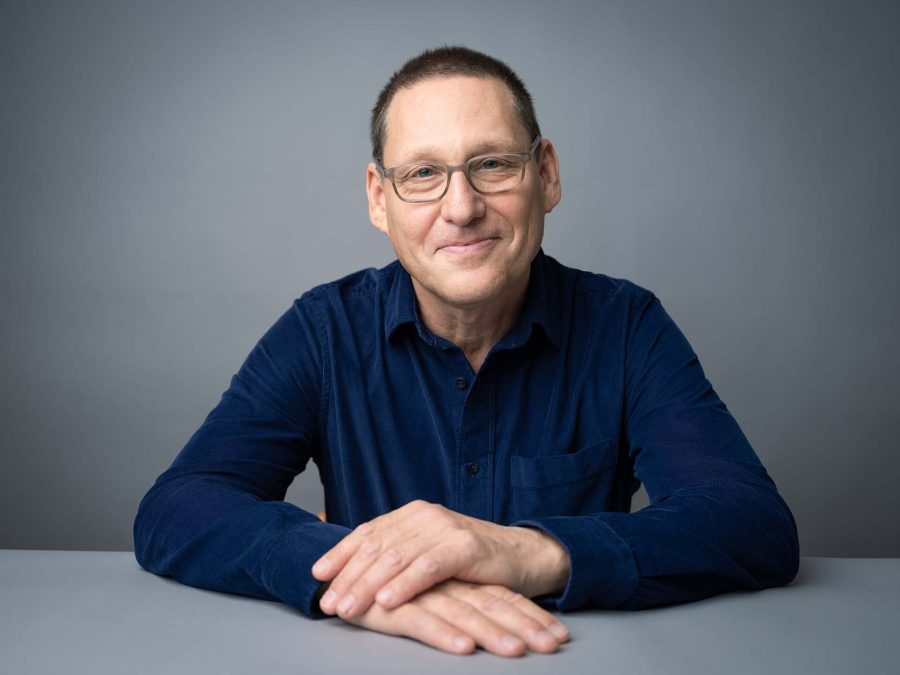
Last April, Canada’s parliamentary left suffered the worst electoral blow in its history — losing official party status and winning just seven seats in the House of Commons. With Mark Carney’s Liberals now riding high in the polls, and whispers of a snap election as early as this spring, the New Democratic Party (NDP), Canada’s social democratic party, faces a heavy lift as it tries to rebuild. And as five candidates vie for the leadership in the race to succeed Jagmeet Singh, journalist and filmmaker Avi Lewis has clearly occupied its left lane.
A two-time federal candidate and activist, Lewis’s family has deep roots in the party going back to the founding of its predecessor, the Co-operative Commonwealth Federation (CCF) in 1932. For years he has been active on issues of climate justice, worker’s rights, and Palestinian solidarity. Since launching his leadership campaign last fall, has put unapologetically left-wing policies — like the need for a national network of publicly owned grocery stores — front and center.
With less than two months to go in the race, Jacobin sat down with Lewis to discuss his candidacy, his belief in public ownership, his campaign’s approach to organizing, the NDP’s relationship to trade unions and social movements, and his vision of how it can rebuild from the socialist left. This interview has been edited for length and clarity.
I think many reading this will be broadly familiar with you and your work. But before we get to the meat of the discussion — and particularly for the benefit of those outside of Canada — perhaps you can tell us a bit about who you are and the work that you did prior to running for the leadership of the New Democratic Party?
Well, let’s get the headline out of the way. I’ve been successfully married to Naomi Klein for thirty years and I made a film with Molly Crabapple and Alexandria Ocasio-Cortez called A Message from the Future. But kidding and name-dropping aside, I’ve been a journalist and a filmmaker for most of my career. I started as a local news reporter in Toronto right at the end of 1989 — and one of the formative experiences of my working life is still standing around a silent newsroom with everyone watching monitors of the Berlin Wall coming down, brick by brick. So, my career has really been in this period of the end of the end of history, and I came up in the anti-globalization movement of the 1990s, while also hosting a music show for a good chunk of that decade, which was amazing. That feels like a lifetime ago.
But really, I’ve been doing storytelling, communications work, and filmmaking alongside social movements for much of the last thirty years — increasingly around the climate emergency and its intersection with all the other crises that we face. It’s been twenty years since I made my first documentary film, which was called The Take. Naomi and I lived in Argentina for most of 2002, and we went there explicitly seeking alternatives to the neoliberal version of globalization that was being locked in around the world. We’re now living the endgame of that global phenomenon right now, I would argue, with the rise of fascism. For the last twenty years, I’ve really been trying to build a more concrete and tangible vision of what the alternatives are to a corporate-dominated economy and a world run by and for the 1 percent — or the 0.1 percent, which is more accurate these days.
Ten years ago, here in Canada, I worked on the “Leap Manifesto”: a climate justice document that came from a big coalition of trade unions, environmental groups, indigenous leaders, migrant rights activists, and others, which outlined what a healthy vision for Canada’s economy would be beyond fossil fuels. A few years later, the Sunrise folks told us the “Leap Manifesto” had been one of their sources of inspiration for the Green New Deal. And then we brought that Green New Deal back here to Canada and are really trying to breathe life into the positive vision for what democratic ecosocialists are fighting for — in movement struggles and now, in the most recent decade of my life, in the electoral sphere.
I do also want to ask you about your family off the top here. For at least three generations — going back to your great-grandfather Moishe — your family has been deeply engaged with politics and activism, both inside and outside of electoral politics. This is something I think a few of your less charitable critics have sought to frame in a negative light. But I’ve heard you refer to it as a legacy of struggle. What does that legacy mean to you?
Well, on the democratic socialist left you don’t inherit money or power or property. If I’m lucky, I’ll inherit not too much debt, quite frankly, in terms of the material conditions of inheritance. Instead, our inheritance is one of struggle. And in my family, that’s been democratic socialist electoral work. My great-grandfather Moishe Losz was a Bundist leader (shout out to Molly Crabapple’s forthcoming book on the Bund, which looks absolutely incredible). The Jewish Labor Bund was a Jewish socialist political party, trade union, social movement, a kind of all-of-the-above people’s movement that was anti-Zionist from its inception. In fact, I looked it up recently, and the Jewish Labor Bund was founded five weeks after the first meeting of the World Zionist Congress. In 1897, there were two strains of Jewish organization in the world. And I come from the one that was anti-Zionist — although members of my family have not always been, and we all have complex histories there.
But I come from that tradition. My family fled to Canada in the wake of the Russian Revolution, when the Red Army swept through the Pale of Settlement where all the Ashkenazi Jews lived in Eastern Europe. They came after the Mensheviks first — you know, they came after the soft left first. And so, in a very real way, my grandfather David Lewis came to Canada fleeing communism. That’s a complicated thing for someone who was part of the founding generation of democratic socialists in the Co-operative Commonwealth Federation (CCF) — our predecessor party to the NDP.
David Lewis was the general secretary of the CCF from 1936 until, I think, the late 1950s and then was leader of the federal NDP in the early ’70s. He gave his entire life to the development of our democratic socialist party. My dad, when I was growing up in the 1970s, was leader of the NDP in Ontario. There was a time — when I was five, six, seven, eight years old — when my dad was provincial leader and my grandpa was federal leader. My mom, Michele Landsberg, was one of Canada’s first feminist newspaper columnists, and she wrote as many as five columns a week for decades, first for the Toronto Star and then for the Globe and Mail. She was a really important second-wave feminist voice in Canada. And that really shaped me just as much — as a lifelong feminist and as someone who went into journalism — as did the inheritance on my dad’s side.
I come from these struggles and their complicated histories. I cite my dad and my grandpa a lot in the work that I’m doing now, running for leader of the NDP, and in particular my grandpa’s famous campaign in 1972 that was based on the slogan “corporate welfare bums,” where he took that first criminalization of poverty reflected in the phrase “welfare bums” — before Ronald Reagan and Willie Horton and the criminalizing of poverty and blackness in the United States as a political weapon — and he flipped it in that famous campaign of 1972 to say: the real welfare bums are the corporations that are getting all this public money. He went across the country, region by region, sector by sector, and just basically did a raw research dump about how much public money profitable corporations were receiving. And Canadians were outraged. It’s hard to fathom what his outrage would be in today’s environment where it’s cartoonishly, exponentially greater than it was then.
But in relation to the Left, my grandfather was deeply anti-communist in a personal sense. He rooted out the communists in the party and in the labor movement and fitted into a Cold War narrative that I think most of us really would reject today. And many leftists obviously did then. That culminated in throwing out a Marxist faction of the NDP in the early 1970s — the Waffle, which was an economic nationalist experiment led largely by a bunch of Marxist professors. He and my dad ultimately purged them from the party — although they were given an opportunity to run for the leadership at the provincial and federal level, so it wasn’t entirely antidemocratic. But that purging of the harder left from the party is a wound that remains open today in the democratic left in Canada. And it’s not a part of my own family history that I’m super proud of. But it’s a real part, and I don’t try to revise it.
Mark Carney’s Canada
Turning to the politics of the present, I want to ask another somewhat general question about how exactly you see the current political moment in Canada. It’s clear we’re living through a quite singular time politically, and that geopolitical events are playing an outsize role in shaping our domestic politics. Mark Carney has in many ways been the main beneficiary of the new dynamic and, in my view, has often played his hand quite skillfully. Carney clearly understands the particular appeal his calm and managerial style holds for many people — we saw this with his Davos speech and the reaction to it in particular. So what’s your assessment of all this, and what do you see as the major openings for the NDP in this environment?
It’s a unique time in Canadian political history. In a way it feels like we’re passing from one geological era into another — we need Mesozoic names for things right now because there’s a grinding of the plates as we pass out of one era into another. And it’s been punctuated by the unprecedented economic attacks from the Trump administration. But that comes at the end of decades of economic integration with the United States. The NDP and we on the Left, the labor movement, and the social movements, we fought these free trade deals, starting with the free trade agreement in 1988 between Canada and the United States that became the blueprint for the World Trade Organization and the whole period of so-called free trade and corporate globalization.
We fought them from the beginning because we saw the danger in integrating our economy and our fate so deeply with both the seat of global empire and an economy ten times our size that could crush us when rolling over and not even notice. And now we regularly hear about how we ought to be the fifty-first state, and yet we are so compromised in responding because of the last forty years of free trade. We warned at the time: look, they want to take the oil. Now they’ve got the oil. They want the water. Well, they don’t have their hands all over our water yet, but they’re still trying. We don’t want to be the gas tank on the US Humvee of the future. And that’s exactly what we are now.
It’s a very clear moment in some ways, especially because Carney wiped out the NDP. We lost party status, and a huge part of our base departed for the Liberals in a moment of fear in the last election because of the attacks from Donald Trump and the threat of annexation, and flocked to Carney as a Captain Canada figure. But Carney has rapidly gone quite far to the right and Canadians are still a little bit in suspended animation — not realizing, I don’t think, how sharply to the right he’s gone.
He’s passed major pieces of legislation to fast-track huge extractive nation-building projects with Conservative support. They’re cracking down on immigration, deporting people — though that started before Carney with Justin Trudeau, who “froze” immigration levels, which meant that thousands of people a day lost their status and a couple of million people, at the stroke of a pen, had their status cut short. And it’s now getting even worse for new Canadians under Carney.
Canadians are not fully aware of this yet. It’s a complicated moment that requires a lot of clarifying and a lot of public education for people to really see where we’re at. At the same time, I see an immense field of open opportunity for the Left. Carney’s Davos speech was rightly praised, and I think it introduced a note of loftiness and a grander expression into our political space that we haven’t had in a very long time. It’s been very bare knuckles and very uninspiring. So yeah, quote Thucydides and Václav Havel and call Trump the “hegemon.” It’s kind of exciting. But at the same time, you know, it’s starkly at odds with some of the things that he’s actually doing.
He has doubled down on generative AI to the extent of appointing a minister in charge of AI. They did a thirty-day national consultation on this world-changing technology and called it a “sprint,” adopting the language of the tech bros. They’re absolutely all in on this technology — which has merged with US foreign policy and created a financial bubble that could burst with devastating effects. It could be worse than 2008. At the same time, he’s enforcing austerity and laying off more than forty thousand federal workers while slashing tens of billions of dollars in public spending — and somehow AI is going to be used in the Carney administration as a tool that makes government more responsive and more productive.
He’s embracing some of the worst tendencies of the United States. And while he enforces austerity, he found $9 billion in a heartbeat last year to boost our military spending to 2 percent of GDP to placate Trump’s NATO demand. He has since gone even further and announced that we’re going to rapidly ramp up to 5 percent of GDP in our defense spending — which, in a country like Canada, would be $150 billion a year. You can multiply that by ten in order to get a sense of what it would mean in a country like the United States, and even the United States doesn’t spend that much on the military.
That would change the culture and the character of our country. And more than that: our military and our military command is deeply integrated with the US military already. The people in charge of our armed forces are not interested in delinking from the United States.
Carney was elected as Captain Canada, but he’s making commitments and moves that integrate us more deeply with the US military establishment, with US border enforcement, with Immigration and Customs Enforcement (ICE). It’s a very contradictory moment that offers huge possibilities for the Left, particularly because it’s a time when people are rightly preoccupied with what our campaign calls the everyday emergency of just trying to get by in an impossible, unfair, and rigged economy. Which is why we’ve been laser-focused on the cost-of-living emergency and the real solutions to it from the get-go. And we’ve experienced incredible reception, momentum, and political electricity from these very clearly expressed and ambitious demands that would actually make people’s lives better.
Policy Left Hooks
I have a two-part question pertaining to policy. I want to ask about the content of your policies, and in particular the full-throated case you’ve made for the public sector and for public ownership as a policy tool in particular. But a related dimension here — and it strikes me that your campaign has kind of led with policy in a way that’s somewhat unusual — is the strategic one. So why lead with policy and with these policies in particular?
I think you’ve articulated it really well as someone who’s been watching Canadian politics really closely and. I think, called this out at the gate. We made an explicit decision not to launch in a traditional way, where the candidate is introduced to the country and it’s about personal political branding. Because the cult of leadership is a failed model — and it’s built a lot of disappointment on the Left where, you know, we have our shiny figure that’s supposed to go out and do battle with theirs. That’s actually not how we’re going to build power and win things.
We decided: we’re going to launch with ideas, we’re going to launch with solutions. We’re going to bang on the open front door of people’s panic in Canada when it comes to paying the bills. And I think it’s worse here than in other places because of the incredible corporate concentration in our economy. We said: We’ve got five big grocery chains that dominate more than 80 percent of the market. They price-fix, they collude, and they are profit-gouging. The biggest billionaire of them all, Galen Weston, is worth $18 billion. And you are sobbing at the grocery store checkout, along with the cashier whose wages haven’t gone up in ten years, because grocery prices are off the charts. People visit from other parts of the world and ask how it can be $15 for six chicken thighs. That’s ridiculous.
We need a Green New Deal. We need a wealth tax. We need a public option for groceries, public banking, and public options for cell phones and internet plans. And we’ve paired these big proposals with a refreshed version of Bernie’s 2016 big organizing strategy in order to scale up a national campaign from scratch here in Canada. Here we have very strict election finance rules. We were not allowed to raise or spend a cent until the race officially opened. And we fought a behind-the-scenes battle over the rules for the race within the party to try and get a longer race. Because, initially, some of the establishment figures in the party wanted a very short three-month race, which would’ve been a coronation for anyone who was already in office and had the backing of large parts of the party establishment. We ultimately won a seven-month race, but we still had to create a national campaign out of thin air and only had a couple dozen volunteers to start with.
But we built an organizing model that was based on a deep connection with social movement organizers who would see their own long-standing movement demands reflected in a national campaign and in the electoral space — sometimes for the first time — and would have their organizing prowess recognized. And we recognized that that was not always going to be an easy or fast relationship because social movement organizers in Canada have been disappointed by the NDP over and over again in recent years. So there’s a lot of what our campaign manager, Savhanna Wilson, famously dubbed N-D-P-T-S-D out there in social movement spaces. Sometimes we had to build more slowly with folks. But people quickly saw that we really were going to be advancing movement demands in the national electoral space, and we attracted different groups of movement organizers. We also have a distributed organizing model where we now have fifteen regional chapters that have a lot of autonomy when it comes to the tactics they use.
Yes, we have central communications. We have the video that we do and the design that we do — we found an incredible designer to make our stuff look lovely. We refer explicitly to the 1930s and ’40s CCF and its moment of peak electoral influence in Canada, in the pre–welfare state moment when the Left was really surging, between the Depression and World War II. But locally, people have a ton of autonomy in how they organize and this has allowed us very fast growth to become a very large campaign in a very short time.
Taking On the Grocery Cartel
Something you’ve talked about is the need for a less centralized style of leadership, and perhaps one where there’s greater participation from members. I find those to be compelling ideas, and it sounds like you’ve been embracing them on the campaign with some success. But in hearing about them I think some people are liable to see a tension with certain imperatives of modern politics, like message discipline. I don’t always find the word “professionalization” very helpful, but it often comes up in these sorts of conversations and I’m curious how you see member participation and a less centralized style of leadership working in tandem with the pressures of electoral politics — particularly in the context of something like a federal election as opposed to a leadership race?
Well, it’s going to be much more to manage. Democracy is messy. And nobody’s proposing a consensus process for the election platform or for every minute-by-minute news cycle or decision of a leadership team, you know? But I think it’s important to look at what’s happened to the NDP since our peak under Jack Layton, a leader who famously had our greatest breakthrough to Official Opposition status for the first time in 2011 and tragically died shortly after that. Jack was an incredibly charismatic and powerful figure who also began the process of centralizing control in the party, in the leader’s office, and of professionalizing the party. Implementing modern political techniques like focus groups and message testing, working more closely with comms shops and stuff like that really became the norm under Jack, as did the fact that most of the major decisions of the party were increasingly made by a small group of people in the leader’s office. Under our last leader, really only a couple of people made the vast majority of decisions in the party.
Contrast that with the constitution of the party and with its history: the CCF was a workers’ movement that came out of prairie populism, farmers, social gospel, and unemployed workers during the Depression. It really was what my grandfather in the 1940s called “the political instrument of the people.” In fact, in a book that he wrote in 1943 with the socialist poet Frank Scott called Make This Your Canada, they actually talked about the 99 percent and the 1 percent. So being a party of the 99 percent is one of the oldest ideas in our party. And the current NDP constitution makes the most powerful decision-making body in the party the convention of all the members.
We have a democratic constitution, but it has not actually been a very democratic party for the last generation. I think to understand the tensions you have to understand where we’re at, and accompanying that has been the rightward drift of the entire political spectrum over the last thirty to forty years, where the NDP has gone from clearly being a democratic socialist party to being more of a center-left party — much as all democratic socialist parties in the world have. All of these trends have been happening at the same time. And I think it’s important to keep them clear and separate because just decentralizing power from the leader’s office — obviously leaders are elected to lead, right? It’s in the job title — doesn’t by itself resolve these deeper political problems.
But having less ironclad control over everything in the party, all the way down to the riding level and the leader’s office, that can be accompanied with a more honest, forthright, and ambitious approach that names the villains in our economy — the billionaire class. It can also name the reasons why life is getting harder and more impossible for ever-growing numbers of people, and propose things like public ownership that would actually address the failures of capitalism to provide a dignified life for the vast majority of people at a price that they can afford on their wages. And these things are reaching a breaking point, right?
So we need to democratize the party, make the offer clearer and more ambitious, and channel the legitimate rage of people at the daily unfairness they have to face — and these things have to be done all at once.
I think there’s great appetite for all of them, but differing levels of appetite among some people in the party. Some party members are really anxious about going for a more direct and ambitious approach. But directness and ambition must be well calibrated. A lot of us feel that, for example, to cut the federal tax on groceries as a solution to the impossible cost of living . . . who cares? How is that going to make a difference to me when I get to the checkout? Even price caps are a temporary measure that would be just as hard to implement as developing a nonprofit, government-owned, publicly run, unionized, subsidized grocery chain.
We’ve costed this idea out with a series of experts. Our plan is for fifty warehouses, plus local grocery stores across the country — essentially a public Costco with unionized employees, likely organized by the United Food and Commercial Workers (UFCW). The government would cover the up-front costs: the stores and the land itself, refrigeration, lighting, and so on. With food priced 30 to 45 percent cheaper, and with additional discounts for people in northern and remote communities where food is crazy expensive, the program would cost about $300 million a year. That’s one half of 1 percent of our defense budget.
You can frame that as a wild-eyed, frothing, Soviet-style demand. Or you could say it’s a modest proposal we can easily afford in a country that can propose spending 5 percent of its GDP on the military. We are living in radical times, and this is actually a modest and practical proposal to provide food under public ownership to a segment of the population that just cannot pay the price-gouging cost of groceries.
“Socialism Is the Big Tent”
I want to stay with the question of the NDP itself, and some of the internal debates we’ve seen spring up during this leadership race. Some of those debates are about strategy — specifically, what kind of coalition the party should be trying to build as it rebuilds from last April’s historic losses, the worst since the CCF was founded in the early 1930s.
There’s obviously a lot to discuss here. But the way the issue is often framed is as a choice between either leading with left-wing policies and values on the one hand, or broadening the party’s appeal by building a larger coalition on the other. You clearly don’t see things that way. At one of your recent events, I saw some campaign pins going around that read “socialism is the big tent.” What do you mean by that?
That was something Naomi said during a webinar we did, and it might’ve been a subtle counter-message to one of the other campaigns. But yes, I think we’ve raised $1.1 million four and a half months into this campaign, which by Canadian standards — and for the NDP — is record shattering. We’ve smashed all previous records, and we’ve been filling huge venues and playing nightclubs that have been filled to standing room only. The campaign is really catching fire.
We’ve had donations from 887 different postal codes, so our messaging is landing in every part of the country. We’re even reaching conservatives who are disaffected in this moment of intense unfairness in our country. We did an add-your-name campaign digitally about this public option for groceries, a clearly socialist idea — we simply listed Galen Weston’s net worth and said that we need a public option for groceries. We then had callers reach out to the people who had signed on. And what we’re finding is that we are reaching conservatives who are just as mad at the price of groceries as leftists.
In a way, we don’t lead with the ideology, and I don’t think that’s necessary these days. What is necessary is addressing the material emergency of people’s lives with solutions that actually work, or would work, and that operate on a scale that would actually work. That is what people respond to.
When I say “socialism is the big tent” what I mean is this: the center left has been pre-disciplined by what is currently considered “politically serious” by the very serious people that decide these things for us. And governing within those limits hasn’t been able to meet the emergency that people are living in. It’s also failed to excite people for a generation. We actually know what needs to be done because we’re living in an epic period of market failure. When the market is failing to give people the things that they need at a price they can afford, that’s quite literally what the government is for.
Take the housing emergency, which is even worse in Canada than it is in the United States and Europe, because our housing bubble never deflated. There is an entire generation of people who will never be able to own a home, and even the rental market is eye-wateringly unaffordable. And our prime minister got elected on a promise to build housing on a scale that we haven’t seen since World War II — in the postwar period there was a huge build-out of public housing as veterans returned. The thing is, he created a new agency to do it, but it turns out it’s built around the same old neoliberal idea, which is to give some billions of public dollars to private developers and hope that the market will solve the problem for us. And within a year, he’d already come down with a hard austerity budget and cut that whole thing in half. So the housing emergency in Canada remains utterly unaddressed.
And what we’re saying is: why does our prime minister, who is a banker and is supposed to understand how capitalism works, think private developers would build so much housing that there would be a glut big enough to make prices fall? Private developers would never do that. They would maintain scarcity.
We need a public developer that would hire public construction companies to build nonmarket and nonprofit and supportive and cooperative housing, and rental units geared to income — public housing that could be beautiful, like in Vienna. Housing that could have swimming pools on the roofs and common spaces in courtyards for day cares and libraries and tool libraries and right-to-repair centers. There’s so much we could do if we just put those hundreds of billions of public dollars that are flowing upward in a torrent into the balance sheets of profitable corporations. We need to redirect that fire hose of public spending directly to the public good.
People are responding, and I think that’s a clue about our political moment and about where the political energy is. When that’s paired with an organizing approach that trusts the base, it allows for exponential growth and a real movement. We are building the infrastructure in this campaign so that if we’re elected, if we win, the party will use it in the next election. We are building the organizing culture, the political infrastructure, and the actual hard organizing infrastructure that can be deployed immediately. That could be as soon as next fall — or even this spring if Carney wants to pull the trigger on an election.
Creating Coalitions
Something else that’s arisen as a point of contention in the race is how the federal NDP should orient itself toward the party’s provincial sections. Historically, there have been disagreements between the national NDP and its provincial wings — over wage and price controls, during the constitutional debates of the early 1980s, and so on. More recently, some have argued that there shouldn’t really be any daylight between the federal NDP and its affiliates. How do you see this?
Yeah, that’s a real one. And because of that issue I’ve reached out to the NDP premiers: Wab Kinew in Manitoba, Dave Eby in British Columbia where I live, and other provincial leaders — especially Naheed Nenshi, the Alberta NDP leader. I had tea with Marit Stiles in Ontario a week and a half ago. And I’ve had a lot of warm and collegial conversations with these provincial NDP leaders. We recognize that we’re going to embrace different policies. A lot of them, of course, are for the same things: bringing up the wage floor, balancing the scales of society, improving the right to unionization and workers’ rights in general. Many of the fundamental policies we’re totally aligned on. And then there are other policies where we don’t agree.
I believe that the federal NDP must be a party of climate clarity. It’s not a strident anti–fossil fuels position. It is a reality of physics on planet earth. We’ve got to get off fossil fuels for economic reasons. We’re heading into another bust in the oil industry, yet we’ve been doubling down on LNG [Liquified Natural Gas] in certain areas of Canada.
Provinces in Canada are trying to create LNG and put it into a glut market — not to mention the climate emergency, which clogs our lungs every summer as we watch towns that we love burn down or flood and be destroyed. We need a federal party that is a climate leader, and we can tie together many of these material benefits, while addressing the cost-of-living crisis, to climate solutions — whether it’s a heat pump in every home under public ownership, or an electric bus revolution to reconnect our vast country, or a twenty-first century electricity grid so we can roll out renewables and have interprovincial trade and clean electricity.
We can create jobs, use Canadian materials that we can’t sell to the United States because of tariffs, and return independence to the Canadian economy while lowering people’s monthly heating bills — which is a huge thing in a cold country. We can improve the cost of living while slashing emissions in transportation, housing, and buildings. And we think that the party’s path back to prominence federally is based on a Green New Deal kind of politics.
I think we’ve gotten good at explaining the everyday cost of living benefits of these climate solutions and not leading with a bunch of climate-speak. But our provincial counterparts — some of them are all-in on fossil fuels, and we have differences of opinion about that. The key is to actually model for Canadians how we work together across differences, which is something that people want from our democracy — people hate toxic partisanship, and we need to work in coalitions.
The “Leap Manifesto” itself was a collective vision that was navigated across a huge number of differences, between the union that represents oil sands workers and 350.org, who were both involved with the document in the final stages. The ability to work together across differences is the key. We’re a democratic party. We’ve traditionally had disagreements between federal and provincial sections, and when we handle them like adults with respect, we can navigate them.
The final thing to say on this is just that we all operate in different political contexts in a vast country where there are huge regional differences. In Canada, west of Manitoba, there are basically two party systems. There isn’t a provincial Liberal Party in all of Western Canada. So provincially, the NDP in Manitoba, Alberta, Saskatchewan, and British Columbia have a lot of people who vote Liberal federally and vote NDP provincially. That’s their winning coalition. That’s a political reality. They’re not exactly the same coalition as the federal party across the whole country.
We have the ability to build a left-populist majority. I believe a vast majority of Canadians know that climate change is happening — 83 percent want the government to do something about it, and I think this can be a winning proposal. But in the realpolitik of the western provinces, particularly British Columbia, Alberta, and Saskatchewan, they are fighting genuinely hard right forces — MAGA-like political cultures. They are looking across the trench at the extreme right. We support them and love them — and want them to be in government. But we don’t have to agree on every last issue, and I think we can agree to disagree on some things, even fundamental things, if we do it in a respectful and collegial way. I feel that can be done, and, having experimented in these conversations with provincial leaders, I can say that, so far, it’s going really well.
The Fight to Come
We’ve just passed one of the leadership race’s most important dates. January 28 was the last day for new members to sign up and be eligible to vote. We also recently got some fundraising numbers from Elections Canada. So, in closing here, how do you see things just under two months out from the leadership convention in Winnipeg? What’s ahead for the campaign as the race draws to a close?
Well, the fundraising numbers — we knew what we had raised, but we didn’t know what the other campaigns had raised. When it turned out that our campaign had raised 47 percent of all the money that was raised by all of the campaigns, it was a surprise and immediately vaulted us into front-runner status.
I think the other campaigns are now sharpening their attacks and contrast lines, and we’re starting to get mainstream media attention. And of course, having had a long career in television, I know that they need a horse race. They need some drama and excitement — so people are trying to gin up conflict and stuff like that, which honestly doesn’t really exist. We agree on most things as New Democrats, with a few clear distinguishing points, particularly around fossil fuels. But, again, there’s not a whole lot of drama to be had.
Going into the final two months, we’re experiencing a huge amount of momentum with big, big crowds at all our events and a significantly larger organization than the others. But there’s still no feeling that we’re going to win, because anything can happen. It’s an extremely complex environment. It’s a vote among the members, and the membership list is now fixed. Our job now is to reach every single one of those people with our exciting, passionate, and inspiring offer, and actually try to take this momentum to victory in Winnipeg.
But the truth is that what’s exciting all of these people across the country — thousands of volunteers and dozens of chapters and all the rest of it — it’s not winning a leadership race in a party that doesn’t even have party status and has seven members in a 343-seat House of Commons. The thing that’s exciting people is the prospect of actually changing our lives for the better and doing it together with mass organizing and a mass movement behind an electoral political project.
We are not yet even at the first step of winning that actual change. We are going to keep growing and keep being excited and expanding our efforts. The first step is the leadership, and then we need to get back party status and be a force in the House of Commons again. Then, at some point before fascism takes over planet Earth, we have to win government in a country of forty million people and start implementing some of these changes on an emergency basis.
Until we actually start making those material changes, we haven’t done anything yet. We’re just building the wave. I think that gives us a proper sense of our underdog status. I mean, imagine if we were actually able to take power in a country the size of Canada. That’s when the real battle would begin, because that’s when the forces of capital across the globe would notice what we’ve built. And when we get to that stage, we better have an educated, mobilized population where millions of people are engaged in democratic organizing in their workplaces and in their daily lives. Because that’s what it’s going to take to actually stand up to the real powers on earth. The Winnipeg Convention is stop one on a journey that we hope will go much, much farther.