In an age of renewed empire, the question of how to resist has again raised its head. The interwar Latin American left’s debates over race, nation, and class shed light on the thorny problem of self-determination within anti-imperialism.
Review of Radical Sovereignty: Debating Race, Nation, and Empire in Interwar Latin America by Tony Wood (University of California Press, 2026)
In the early 1920s, the Latin American landscape was rocked by two political earthquakes. Though different in nature, the Mexican and Russian Revolutions shared much in common: domestically, both fought for the cause of social justice, while abroad both raised the flag of sovereignty against imperialist interests. Most important of all, the triumph of the Mexican and Russian revolutions opened a new space for debate in Latin America, where egalitarian societies and pan–Latin American anti-imperialism were the order of the day.
Under the influence of both revolutions, radical leftists across Latin America developed different (sometimes competing) agendas to counterbalance US influence and ensure the dignity of the subaltern classes. However, those debates — and the revolutionary potential of Latin American societies in the 1920s and ’30s — have for too long been ignored by historians. In fact, before the publication of Radical Sovereignty: Debating Race, Nation, and Empire in Interwar Latin America, it was common to neglect the impact of the Russian Revolution in the region, to see Latin America’s political movements through a blinkered national lens, or to associate pan–Latin American internationalism with the Cold War era exclusively.
Tony Wood restores the border-crossing debates held by Latin American radicals in the interwar years, shedding light on the tensions, depth, and complexities of leftist thought as it tackled issues of race, the nation, internationalism, and class. Challenging the liberal critique that Marxists ignore the question of race, Wood demonstrates through vast archival evidence that Latin American radicals in fact spilled rivers of ink and held dozens of rich discussions about racial injustice — and imagined possible ways to eradicate it.
Even more, different strands of Latin American leftist thinkers and policymakers proposed creative solutions to liberate black and indigenous populations from oppression and bring them into the struggle against imperialism and capitalist exploitation. How to do so was a point of contention: some advocated for the integration of subaltern populations within the existing nation-states, granting them a high degree of autonomy and equality; others called for the formation of entirely alternative national units; and yet others imagined transnational solutions, such as a confederated Latin American polity.
Self-Determination and Its Discontents
Tracking those intellectual exchanges, Wood provides a portrait of a radical left consumed with the “entangled relationships” of race, nation, class, and citizenship, where the ultimate stakes of those exchanges were the liberation of the subaltern populations of the Americas. Moreover, those same debates extended beyond the interwar period, establishing a repertoire of ideas, discourses, and actions that were taken up by left-wing groups in the Cold War era and beyond.
Leading those discussions, radical leftists “called into question not only the external borders of existing nation-states, but also internal divisions between social classes, ethnic groups, and categories of citizen.” In doing so, they expanded the notion of citizenship — transcending political rights with a more robust vision of social justice —and of sovereignty, understood as a shield against imperialism and as a vehicle for local autonomy, freedom, and democratic self-governance.
The concept of self-determination is central to Wood’s analysis — so central that one might quibble that the author focuses on the Russian tradition to the neglect of the Mexican case. In Mexico, it was at the heart of the revolutionary struggle and helped consolidate the postrevolutionary state, both domestically and internationally. Domestically, Emiliano Zapata’s famous phrase “La tierra es de quien la trabaja” (“The land belongs to those who work it”) encapsulated the peasant’s right to self-determination as a founding principle of the ambitious redistributive land regime of the revolutionary 1917 Constitution. It also guided the agrarian policies pushed by the postrevolutionary government after 1920. Likewise, from the administration of Venustiano Carranza (1917–1920) onward, Mexico became a global leader calling for “the unrestricted respect of sovereignty, non-intervention, and the right of all peoples to self-determination” as central principles of interstate relations.
Wood primarily understands self-determination as defined by the Russian case. Specifically, in the early twentieth century, Vladimir Lenin and Rosa Luxemburg clashed over whether socialists should support the right of national self-determination. Lenin argued that backing oppressed nations’ right to secede from empires was a basic democratic principle and a strategic necessity: without it, workers in dominant nations would reproduce chauvinism, and genuine international solidarity would be impossible.
Luxemburg was more skeptical. She believed that “the nation” was not a unified democratic actor but a cross-class formation led by bourgeois elites. Luxemburg worried that nationalist movements would distract workers from class struggle and strengthen new capitalist states rather than advance socialism. At stake was a question that Wood pursues in Latin America across the interwar years: Does supporting national independence advance working-class emancipation, or does it risk subordinating it to nationalism?
During the interwar period, left-wing Latin American intellectuals — many militants and “fellow-travelers” of the Communist Party, others associated with the Mexican Revolution — revived these questions and wrestled with the concept of self-determination. Though the concept had different meanings for different groups, they shared “a common principle: that people should have the right to determine their own destinies.” In that same vein, Wood argues that self-determination was a radically democratic concept: “the true core of the idea [was] to extend the right to self-rule to groups long marginalized and denied that right.”
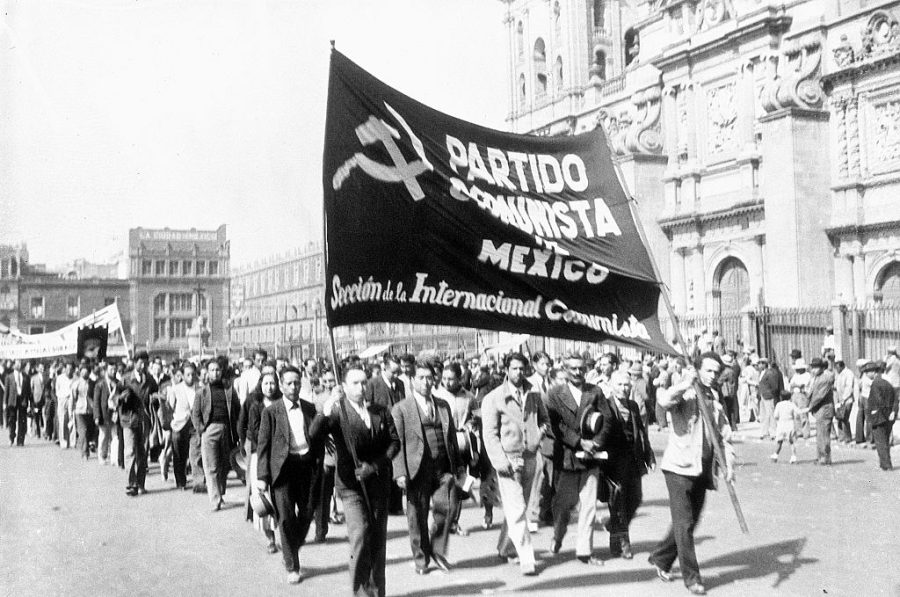
Focusing on interwar Communist and Communist-adjacent groups, Wood draws upon a vast corpus of archival materials, examining sources from dozens of repositories situated in Cuba, Mexico, Peru, Russia, and the United States. Wood unveils a web of transnational connections that shaped radical leftists’ thinking on race, sovereignty, and anti-imperial struggle. Radical Sovereignty not only advances a novel argument about the centrality of race but also bucks the nation-centric histories of the Latin American left: debates over self-determination, class, and race were always transnational in nature. Exchanges among leftist thinkers and activists across Latin America were the driving force of radical political action in the region.
Wood argues that this transnational web of Communist-adjacent thought and action was far more complex than traditional accounts have suggested. The Comintern (or Communist International) was the coordinating body of global Communist parties, dominated by the Soviet Communist Party. It was the organ through which Moscow oriented the political thinking and action of allied parties worldwide. Several historical accounts have viewed the Comintern, especially under Joseph Stalin, as an instrument through which the Kremlin imposed policies on Communist parties abroad — those local parties either followed the Moscow line completely or were ostracized from the organization.
Wood, however, shows that the Soviet line was contested, negotiated, and adapted by Latin American radicals. Their ideas on racial equality, nationalities, self-determination, and anti-imperialism, although indebted to the Soviets, were also shaped by widespread indigenous movements, Pan-African currents, and black thinkers, whose unique analyses of capitalist exploitation were informed by the historical experience of US domination and the triumph of the Mexican Revolution.
Mexico City: A Transnational Hub for Radical Politics
Wood argues that the Mexican Revolution, particularly in the 1920s, loomed almost as large as the Russian Revolution with the Latin American left. Little surprise, then, that Mexico City, as the capital of postrevolutionary Mexico, became a hub for leftist political imagination, discussion, and activism. Exiles and radical thinkers from across Latin America gathered there to analyze — and try to export — Mexico’s revolutionary political program, which included nationalizations, land redistribution, labor rights, and a fierce anti-imperialist rhetoric.
These transnational connections, Wood argues, were reciprocal: on the one hand, they shaped Mexico’s “political and cultural ferment,” contributing to the implementation of ambitious progressive policies under the postrevolutionary Mexican state (especially the political empowerment of peasants). On the other hand, transnational encounters in Mexico City influenced ideas about revolutionary movements, anti-imperialist struggles, and racial liberation that the exiles themselves nurtured and brought back to their own countries.
Mexico City, Wood shows, was a transnational hub where conversations about race, anti-imperialism, and sovereignty took on hemispheric proportions: Mexican peasant leagues (particularly their main leader, Úrsulo Galván) coordinated joint political action with Peruvian exiles of the American Popular Revolutionary Alliance (APRA, especially its leader, Victor Raúl Haya de la Torre), the Mexican Communist Party (PCM), the Anti-Imperialist League of the Americas (LADLA), and the Hands Off Nicaragua Committee (which supported Augusto Sandino’s struggle).
As Wood writes, “All [these movements] were rooted in a shared conviction that the national and the international realms were permeable; all shared the hope that faraway agencies might help reshape local fates, and the actions taken here and now might play their part in making the wider world anew.” Yet different strands of that radical leftism assigned divergent roles to the state. For instance, while APRA cadres argued that the nation-state should be strengthened to combat imperialism, the Communists thought the state — which responded to artificial frontiers — could and should be remade in the name of racial equality.
Internal differences were exacerbated as the external climate grew hostile. Mexican domestic politics, specifically, experienced a “conservative turn” in the late 1920s. Facing external and internal threats and crises, the postrevolutionary government looked to stabilize domestic political life, and transnational enclaves concentrated in Mexico City became an easy target. This included deporting several foreign-born Communists, such as the Cuban labor leader Sandalio Junco and the Italian photographer Tina Modotti. At the same time, fractures within the Left intensified. If, during the early 1920s, diverse leftist currents could air their differences in creative debate, by the turn of the decade rivalries were becoming insurmountable.
The Big Debates on Race and Self-Determination
Part II of Radical Sovereignty delves deeper into one of the book’s core revelations: debates within the Communist movement on black and indigenous self-determination were much more nuanced than is often credited. In this section, Wood shifts his attention to different sites — Buenos Aires, Montevideo, Moscow, Lima, and Havana — where discussions on race and sovereignty were foremost among the concerns of radicals.
Here, Radical Sovereignty challenges the existing consensus about the Latin American left’s alleged blind obedience to the Comintern’s ideological line. During the 1930s, the Comintern adopted a more confrontational approach known as “class against class” or the Third Period, which precluded Communists from forming alliances with social democrats and nationalists and instead advocated for more direct action to radicalize the working class against the “bourgeois state.”
As Wood notes, “while the Third Period brought a narrowing of ideological horizons, it paradoxically created some openings.” Those openings included more ambitious discussions on how to address racial injustice, as well as heated debates over the political significance of the category of race itself. In other words, the added emphasis on class politics precipitated an expanded conception of class-belonging and, with it, an exploration of how class was implicated in racial and national oppression.
Participants in those debates responded to national politics and social realities in their own countries, but they were heavily influenced by transnational connections. For instance, Harry Haywood’s famous “Black Belt Thesis,” presented during the Sixth World Congress of the Comintern in 1928, may very well have influenced ideas about self-determination in Latin American communist movements. The Black Belt Thesis stated that the dense concentration of people of African descent in the rural Deep South presented the demographic, social, and cultural foundations for that population to achieve self-determination and to be recognized as a sovereign political entity.
The Black Belt Argument
For Latin American radicals, the Black Belt Thesis raised pressing questions: Did it also apply to their region? Did Latin American people of African descent suffer the same kind of oppression as their US counterparts? And what about indigenous peoples — was their oppression similar to that faced by African Americans? If so, should Communists fight for the self-determination of indigenous and people of African descent? And did that self-determination mean the creation of new states, or could it be guaranteed within the framework of already existing ones?
The Black Belt Thesis, originally informed by Pan-Africanism, global anti-colonialism, and Soviet thinking about nations and nationalities, also shaped Communists’ thinking about race in the Americas. Here Wood sheds new light on the neglected links between global black liberation movements and the struggles of the indigenous and people of African descent in Latin America.
Through it all, Wood does not lose sight of the fact that self-determination and race were also stumbling blocks. In two important gatherings of Latin American Communists in 1929, hosted in Uruguay and Argentina, the Comintern’s doctrine of self-determination for black and indigenous people produced serious tensions. The Comintern viewed Latin American nations as political fictions that could be redrawn at will to secure the self-determination of black and indigenous populations. Latin American attendees, understandably, pushed back, arguing that existing states were vehicles for resisting imperial domination. Latin American thinkers held heated, often subtly critical, debates over the applicability of Stalin’s theory of nationality and the Black Belt Thesis.
For instance, renowned Peruvian intellectual José Carlos Mariátegui recognized discrimination against indigenous peoples in Latin America but argued that giving self-determination to these populations would only empower indigenous elites rather than landless peasants, creating new bourgeois states instead of liberating the oppressed masses. Afro-Cuban labor activist Sandalio Junco argued that people of African descent suffered multiple forms of racial oppression in the region but pushed back against self-determination. He promoted instead a “proletarian conception” of the “problem of race,” the solution being to demonstrate to working people of African descent that “their place is alongside the continental and world proletariat,” while promoting complete equality among the different races that formed the working class.
Often those debates went unresolved, and tensions around race and self-determination persisted within the Left. But they also had direct implications for public policy and political action across Latin America. In the short term, some countries developed policies to better incorporate indigenous peoples into their nation-building projects, while Communist parties recognized the oppression of black workers and actively sought to recruit them. Later, those ideas shaped the political action of leftist groups during the Cold War and informed the legal codification of nondiscrimination and indigenous rights in the twentieth century.
Such a granular reconstruction of intellectual history is one of the strongest features of Radical Sovereignty. Nonetheless, by focusing on the Latin American softening of Moscow’s line, the author glosses over the Comintern envoys’ attitude to their Latin American counterparts, which was essentially paternalistic and condescending. Based on Wood’s citations and references, they regarded their Latin American comrades’ ideas on race and sovereignty as erroneous and rudimentary.
If, as Wood shows, the Latin Americans did not blindly follow the Soviet line, the question remains whether Latin American ideas influenced the Comintern’s views of race in the region. With the exception of the Black Belt Thesis, Comintern leaders did not seriously consider the discussions of Latin American intellectuals. In other words, did Latin American radicals merely negotiate and adapt Comintern policies at the local level, or did they reshape them at their roots? And to what extent did the Comintern rethink its policies and ideas on race, nation, and sovereignty in response to Latin American debates and adaptations?
Concrete Impact of Self-Determination
Part III of Radical Sovereignty follows the path of self-determination as it moved from intellectual to policy circles in Cuba and Mexico. During the 1930s, the Cuban Communist Party embraced a more resolute position against racial oppression and, with it, reformulated its self-determination policy. This led to a significant growth in Afro-Cuban militancy in the party, both in the rank and file and in leadership positions.
The Cuban Communist Party initially promoted complete racial equality and self-determination for the black population in the region of Oriente. By the 1930s, it had refined the concept of self-determination: rather than thinking of the heavily Afro-Cuban region of Oriente as a separate political unit, it should instead form part of the Cuban national community, albeit with a high degree of autonomy and self-governance. Meanwhile, that autonomy should advance the cause of racial equality throughout the whole island. Wood demonstrates that Afro-Cuban intellectuals and activists were at the helm of a significant policy shift and were pivotal in reconceptualizing race as one of the leading national problems in the fight against imperialism.
Having redefined self-determination, the Cuban Communist Party felt emboldened to lead the charge for racial inclusion, helping to pass laws against racial discrimination in the island’s 1940 constitutional assembly. Their proposals triumphed and formed part of the new constitution — one of several concrete victories in which debates on self-determination and race translated into progressive policies and laws.
Race and self-determination also shaped Mexican public policy during the late 1930s. By that time, a dominant current of thought and policymaking had cohered around indigenismo, an ideological movement that celebrated indigenous populations as key historical actors and a foundational piece of “national consciousness.” However, concrete indigenista policies also sought to assimilate indigenous peoples into a Mexican nation understood as mestizo (mixed race), Spanish-speaking, and modern.
Wood maintains that radical ideas about self-determination infiltrated official indigenismo, moderating the dominant assimilationist approach while promoting a more pluralistic view of education and culture (for example, including indigenous language in primary instruction) and a more materialist vision of the “indigenous question” (for example, pushing for indigenous-led economic development programs).
Considering the contributions of labor leader Vicente Lombardo Toledano and scholar Jorge Vivó to this “radical pluralist” version of indigenismo, Wood neglects to ask why indigenous intellectuals, activists, and leaders themselves did not participate in the formulation of policies. This would have been a welcome reflection, especially after the author shows that black intellectuals participated so prominently in Communist-led policies on race and self-determination in Latin America.
In the epilogue, Wood argues that interwar debates on self-determination and race informed discussions about anti-imperialism during the Cold War and beyond, even influencing the ideas of the Ejército Zapatista de Liberación Nacional (EZLN) in the 1990s. Moreover, century-old ideas of self-determination reappeared in twenty-first century struggles for indigenous autonomy in Bolivia and Mexico.
In an age of renewed American imperialism, it is more necessary than ever to think about how national and transnational collectivities can offer a common resistance. Likewise, as the international order trembles, the Left must rebuild spaces for ambitious political imagination — like the ones Wood evokes — and tackle forms of social injustice and exploitation, both new and old, at the global level.