The investment portfolio of the interim US Attorney for the Southern District of New York shows financial stakes in Epstein-associated financial institutions and Venezuelan oil interests. The Trump appointee stands to win big from his own investigations.
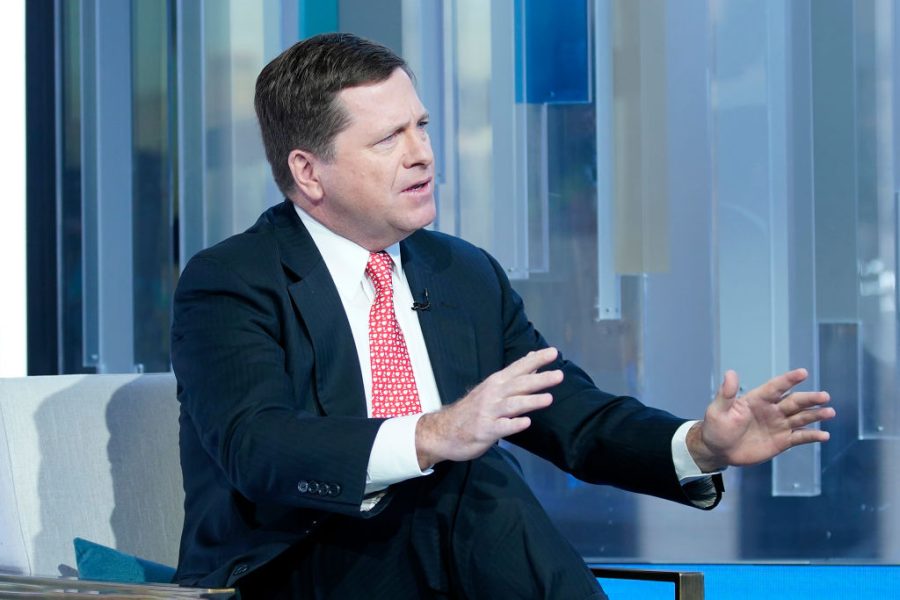
Jay Clayton, a top federal prosecutor leading investigations into sex trafficker Jeffrey Epstein, Venezuelan president Nicolás Maduro, and major Wall Street banks, holds more than $1.6 million in investments in companies with a potential financial stake in those same matters, according to ethics disclosures reviewed by the Lever.
Clayton, President Donald Trump’s pick to run the Justice Department’s “top-dog” Southern District of New York office, owns stakes in multiple oil and gas companies that stand to benefit from Venezuela’s regime change, as well as in Wall Street banks and financial firms currently under investigation by Congress over their ties to Epstein.
The disclosures show Clayton has more than $1 million in financial holdings in private equity giant Apollo Global Management, where he served as board chairman until his Justice Department appointment.
“Jay Clayton has a very personal interest in seeing the Epstein story as a cabined-off story involving a mysterious ‘who could have ever known it’ villain, rather than the story of interconnected immoral elites it appears to be to impartial people,” said Jeff Hauser, executive director of the government watchdog group Revolving Door Project.
“That’s a really paralyzing bias to bring to the role of prosecutor,” Hauser added. “We should want professional skeptics to serve our prosecutors, not the credulous.”
Clayton, a former corporate attorney with no prosecutorial experience and Trump’s former Securities and Exchange Commission chair, served as chairman of Apollo’s board of directors from 2021 until April 2025, when Trump selected him to be interim US Attorney for the Southern District of New York.
Clayton was never confirmed to the position by the Senate, but in a rare move, a panel of judges appointed him to the position until a Senate-confirmed candidate can take over.
Investigations Tied to Epstein and Venezuela
Seven months after Clayton assumed his Justice Department position, amid a public pressure campaign urging the Justice Department to release the so-called Epstein Files, US Attorney General Pamela Bondi tasked him with investigating “people and institutions” tied to Epstein.
According to Trump, that list should include former president Bill Clinton, former Obama administration adviser Larry Summers, billionaire tech founder and Democratic Party funder Reid Hoffman, and Wall Street bank JPMorgan Chase.
Clayton has also been assigned to spearhead the redactions of victims’ personally identifiable information in the trove of Epstein investigation records the Justice Department began releasing on January 30. The process has proved to be a debacle due to failures that left email addresses and nude photos of potential victims unredacted — plus the name of a victim in another high-profile sex-trafficking case recently prosecuted by Clayton’s office.
On January 3, the Justice Department released its indictment against Maduro, which included Clayton’s signature. That indictment has drawn criticism after the Justice Department dropped certain claims and revised portions after submitting it to the court.
The indictment alleges that for more than twenty-five years, Maduro led a narco-terrorism ring that imported “tons of cocaine into the United States.” Clayton is the top federal prosecutor overseeing the government’s case.
Clayton’s Financial Ties
According to Office of Government Ethics disclosures, Clayton still maintains significant investments in many of the companies involved in his office’s work. That includes between $1.5 million and $6 million worth of Apollo holdings, between $15,000 and $50,000 in JPMorgan Chase and Bank of America stock, and between $1,000 and $15,000 in Bank of New York Mellon and Citigroup stock.
The Justice Department has not announced any criminal prosecutions of banks tied to Epstein, but Congress is investigating “$1.5 billion in suspicious financial transactions tied to sex trafficking crimes committed by Jeffrey Epstein” and his coconspirators that allegedly flowed through Deutsche Bank, JPMorgan, Bank of America, and Bank of New York Mellon. The Citigroup subsidiary Citibank is among the institutions Senators have called on the Treasury Department to investigate over suspicious activities “relating to Jeffrey Epstein and his associates.”
What’s more, Clayton holds between $19,000 and $110,000 in Chevron, ConocoPhillips, ExxonMobil, Phillips 66, and Valero Energy stock, oil companies with a potential financial stake in Venezuela’s future oil production, disclosures show. He also owns between $50,000 and $100,000 worth of stock in the holding company Berkshire Hathaway, which also stands to gain from Venezuelan oil production, thanks to its 6 percent stake in Chevron.
Clayton’s portfolio also includes between $1 million and $5 million in unvested American Express stock, between $100,000 and $250,000 in Google parent company Alphabet stock, and between $100,000 and $250,000 in Amazon stock, among other holdings.
Federal ethics and conflict-of-interest rules, which apply to Justice Department employees, bar prosecutors “from taking official action in a particular matter involving any entity in which you, or someone whose interests are imputed to you, have a financial interest.”
Those rules also bar prosecutors from participating in cases involving “any person for whom you have served, within the last year, as officer, director, trustee, general partner, agent attorney, consultant, contractor, or employee.”
The Justice Department declined to comment on whether Clayton plans to recuse himself from Epstein or Venezuela-related matters.
“Too Many Conflicts”
During his time at Apollo, Clayton helped steer the company through a public relations quagmire regarding Apollo’s cofounder and former CEO, Leon Black, and his personal and business connections to Epstein.
Apollo appointed Clayton chairman after Black resigned from the position in March 2021 amid scrutiny over his Epstein ties and sexual harassment allegations made against him. (Several, but not all, of the related suits have been dropped, and Black has denied the allegations.)
In a January 2021 regulatory filing, Apollo disclosed an internal investigation into Black’s and the firm’s relationship with Epstein, as well as a letter Black issued to investors — both of which stated Apollo had no formal business ties to Epstein, and that only Black himself consulted with Epstein on business-related issues.
Due to new Epstein Files revelations, Apollo’s claims are now facing legal scrutiny in the US District Court for the Southern District of New York — Clayton’s jurisdiction. While his office is not directly involved in the case, the matter could put pressure on him to include his former employer among the “people and institutions” tied to Epstein that he’s charged with investigating.
A January 30 Epstein Files release contained documents detailing multiple emails between Epstein, current Apollo CEO Marc Rowan, and other Apollo executives between August 2013 and March 2016, long after Epstein had been convicted of soliciting a minor.
In response, a group of Apollo shareholders filed a lawsuit on March 2 in the Southern District of New York alleging that Apollo, Black, and Rowan were “directly or indirectly involved in drafting, producing, reviewing and/or disseminating the false and misleading statements and information” that was submitted to shareholders in the 2021 regulatory filing.
Additionally, two major teachers’ unions are urging the Securities and Exchange Commission to investigate what they call “misleading” claims made in the regulatory filing.
“We are troubled by Apollo’s seeming inability to be forthcoming about the extent to which Epstein was a personal, social, and professional associate of the firm and its partners,” the American Federation of Teachers and the American Association of University Professors wrote in a letter to the commission. “We don’t know exactly what motivates that lack of candor, but it should be investigated.”
Apollo did not respond to a request for comment. But in a February 18 statement, Apollo said there is “nothing new” in the Justice Department’s Epstein documents and that “despite the flurry of coverage and certain constituents pushing their own agendas, the facts remain the same.”
Still, Chris Tobe, an investment adviser and litigation expert for public pension funds representing workers, said Clayton’s Apollo holdings are a “clear conflict of interest” and that he should resign.
“There just seems to be too many conflicts here,” Tobe told the Lever.
This article was first published by the Lever, an award-winning independent investigative newsroom.