In Minneapolis, a new generation of activists is challenging Donald Trump, reviving labor militancy, and scoring victories. Next stop: May Day 2026.
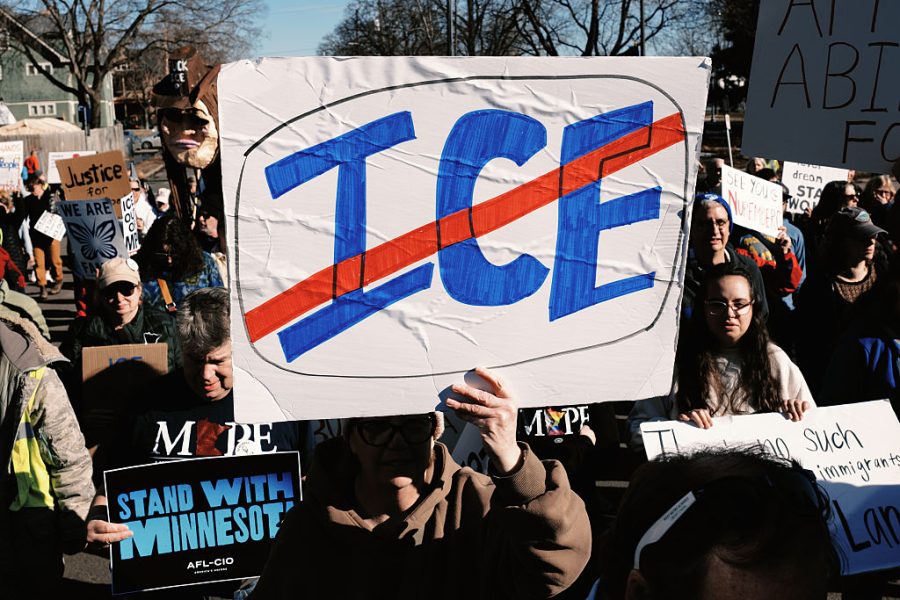
Many of us have felt overwhelmed by Donald Trump’s dizzying array of attacks on other countries, workers, marginalized communities, and our democracy. But after a year of grappling with Trump’s onslaught, the working class of Minneapolis rose to the challenge and fought back.
On December 1, the Trump administration launched Operation Metro Surge, flooding “the Twin Cities” of Minneapolis and Saint Paul with four thousand Immigration and Customs Enforcement (ICE) agents. They blatantly racially profiled people of color, violently detained over four thousand people, and deported hundreds.
In response, tens of thousands of working-class people from different backgrounds joined together to organize protests, mutual aid for immigrant neighbors, and community patrols to inhibit ICE activities.
On January 7, ICE killed Renée Good, sparking a massive outcry. Calls for accountability and the demand for ICE to be kicked out of Minnesota reverberated across the state. Democratic politicians echoed demands like “ICE Out” once it became unavoidable but have refused material measures like an eviction moratorium, despite calls from unions and community organizations to protect immigrant workers who are too afraid to leave home for work and therefore cannot make rent.
A Mass Strike
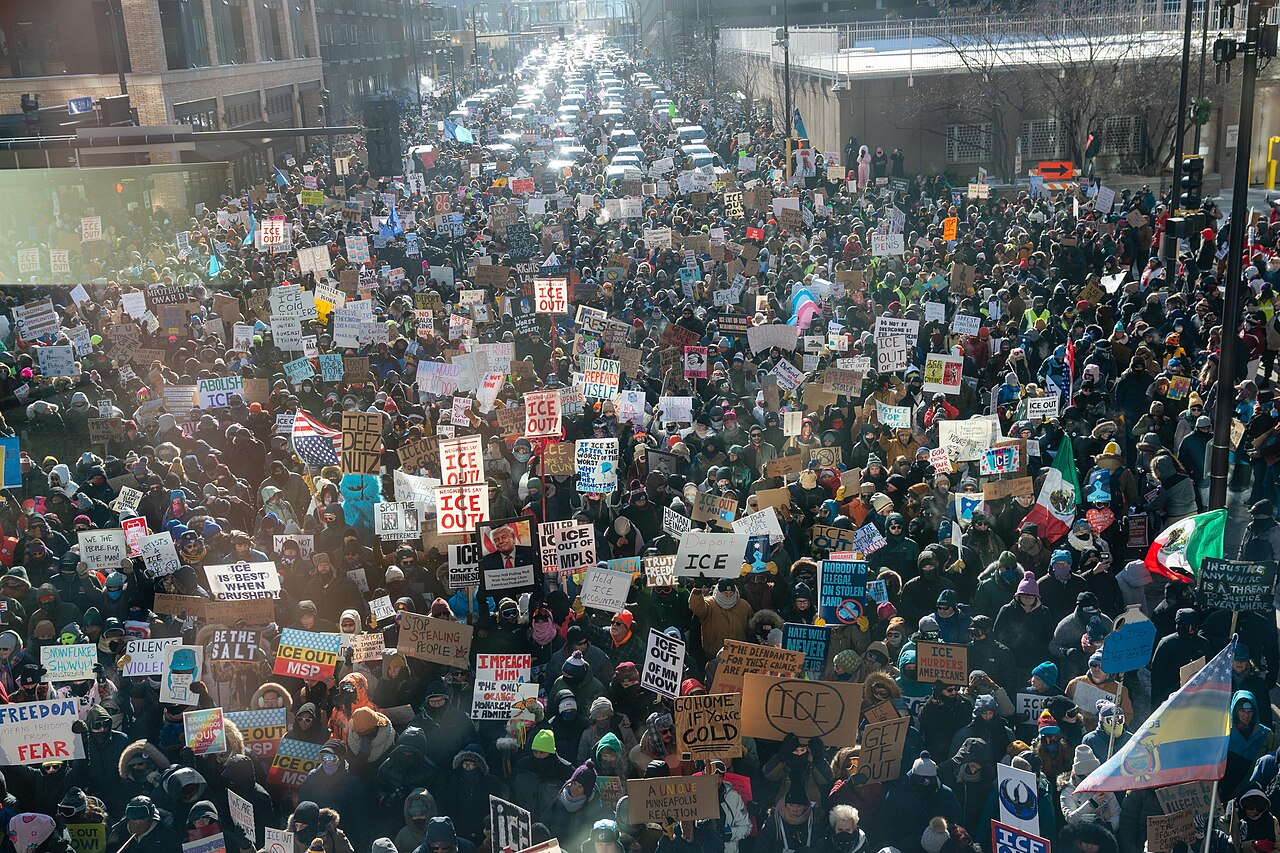
Renée Good’s killing provoked such a huge backlash that a few progressive union leaders in the Twin Cities took the rare step of calling for “No Work, No School, No Shopping” on January 23. AFL-CIO establishment leaders initially resisted this call to strike but were ultimately forced to support it by the resounding anger and pressure of rank-and-file members. Three days before January 23, the Minnesota AFL-CIO finally endorsed the strike.
On January 23, airport workers and clergy disrupted airport operations. Telecom workers and Saint Paul Public Schools educators shut their workplaces down. Over one thousand small businesses were pressured to either close or give free food to protesters. A poll estimated that nearly 10 percent of Minnesota workers did not report to work — a rare political strike. Around 75,000 workers braved −30 degrees Fahrenheit weather (including windchill) to march through downtown.
The next day Alex Pretti was murdered by ICE, swinging public opinion even further against the agency. All these events forced Minnesota’s corporate executives to finally break their silence about Operation Metro Surge. They issued a weak public statement calling for a “deescalation of tensions” but completely failed to criticize ICE’s violent crimes.
Student organizations and Zohran Mamdani called for a national general strike the following Friday, January 30. However, few workplaces actually shut down this time, because few union leaders supported the “general strike” — a missed opportunity.
But unions and coalition partners did organize over two hundred solidarity protests across the country. The unions were often pushed to act by a new generation of activists who have become increasingly experienced and influential over the last fifteen years. Many of these activists came out of the Black Lives Matter movement, the Democratic Socialists of America (DSA), and Bernie Sanders’s presidential campaigns, and they’ve spent years patiently organizing within their unions — gaining influence and building relationships and rank-and-file caucuses. This was a moment when our patient work finally paid off.
Rapid response organizing and the mass strike ultimately forced Trump’s ICE operation to retreat. On February 12, the administration announced ICE’s withdrawal from Minneapolis. Officials claimed their mission had been successfully completed, but this was clearly an attempt to save face.
This was a rare victory that revealed that Trump is not all-powerful. Although there is still work to do to remove the remaining ICE agents from Minnesota, the local working class showed that Trump can be defeated, even on the issue of immigration. It requires, though, that activists study Marxist and socialist ideas and do the patient long-term work of deep organizing within the working class. This is how we can build the base to be able to get unions and organizations — often led by moderates — to organize mass protests and powerful strikes when conditions demand it.
May Day
Activists are building on this victory by organizing a national day of action, including strikes where possible, against Trump’s agenda on May 1, 2026.
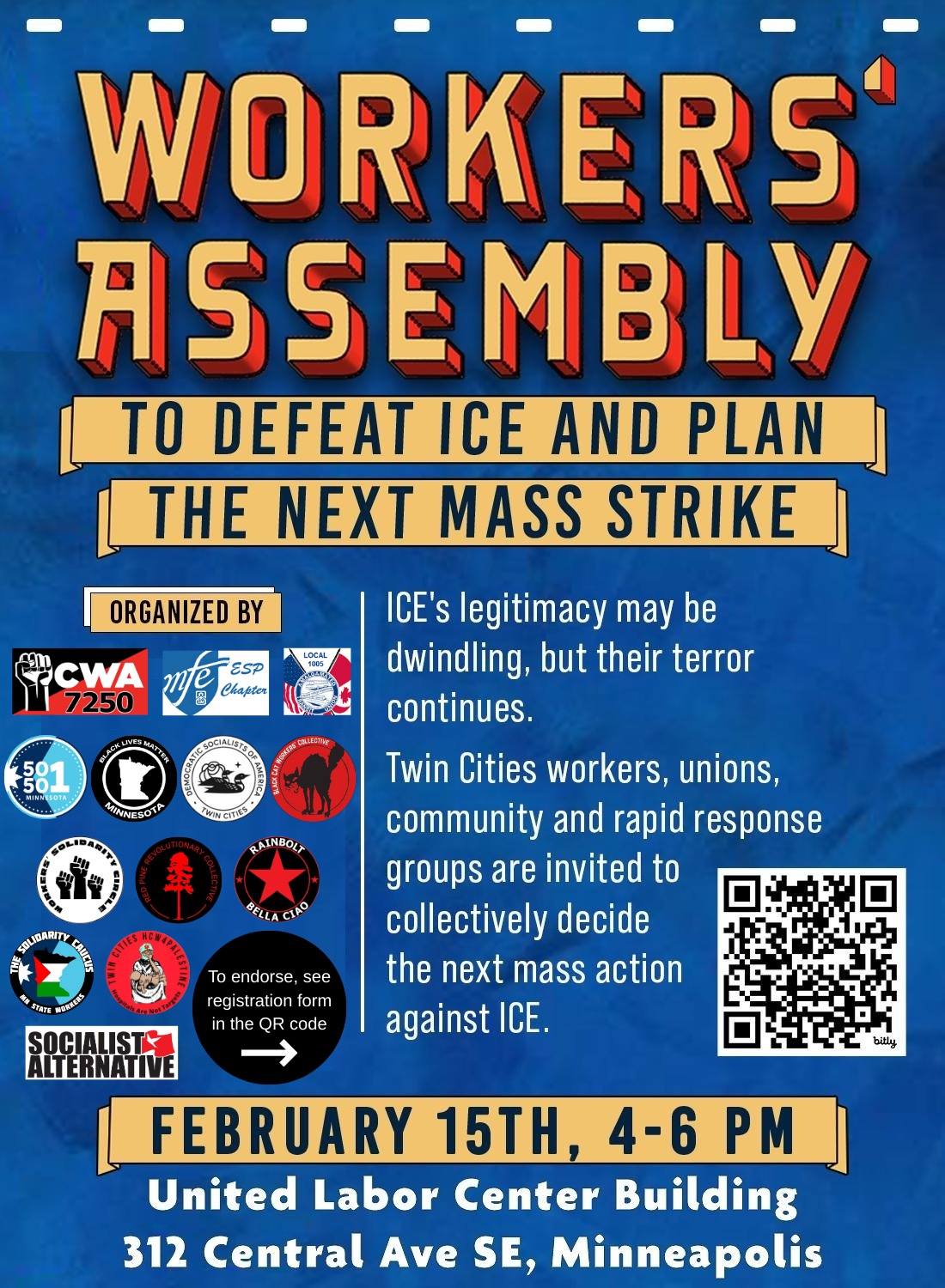
In the Twin Cities, to pressure hesitant labor leaders on one side and avoid ultraleft calls for unprepared “general strikes” on the other, a coalition of labor and left-wing organizations organized a workers’ assembly to decide how and when to launch the next mass strike. Over twenty organizations endorsed the February 15 assembly, including Communication Workers of America 7250, Amalgamated Transit Union 1005, and the educational support professionals’ chapter of the Minneapolis Federation of Educators. Nearly four hundred workers, including at least seven union local presidents, energetically participated in the democratic assembly.
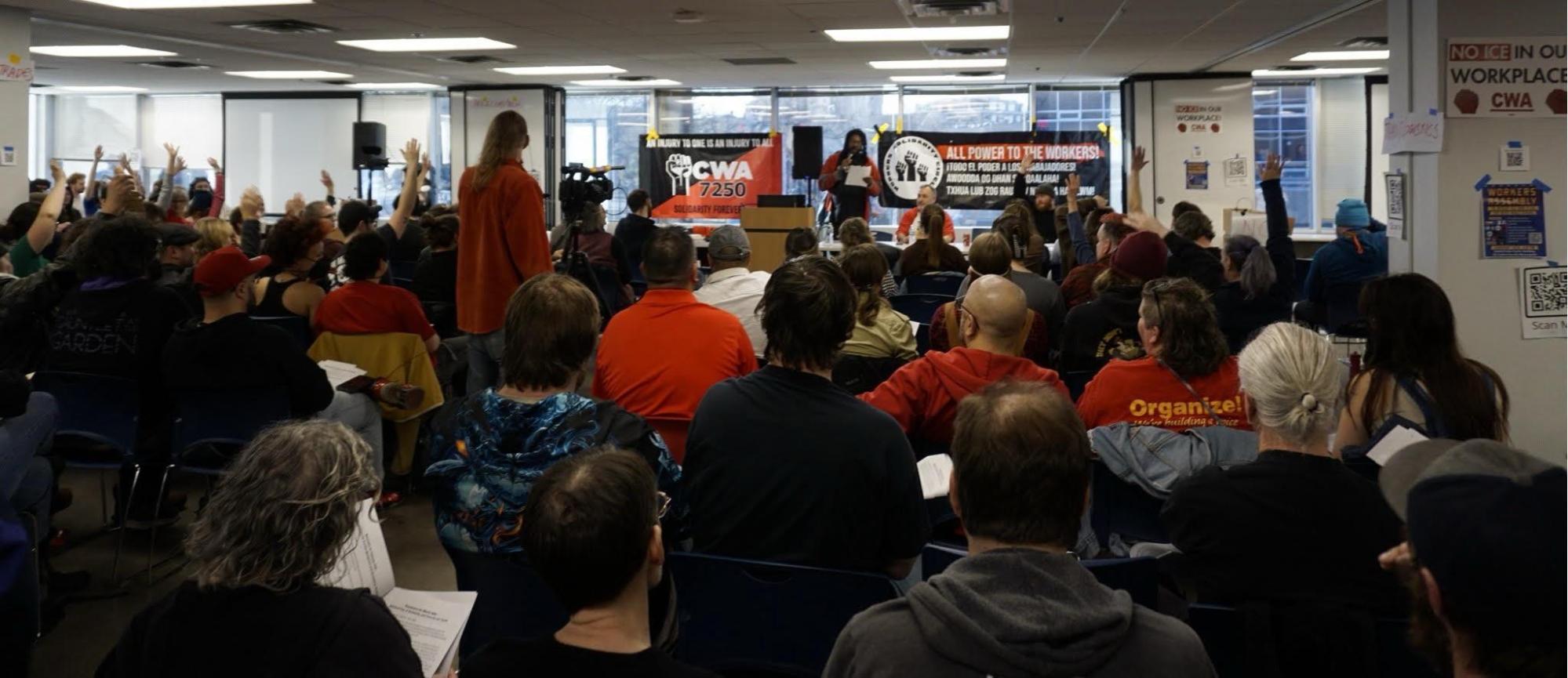
The main resolution the assembly adopted called for a national day of action across the country on May 1, 2026, including another day of “No Work, No School, No Shopping” in the Twin Cities, and anywhere else strikes can be organized. The assembly set concrete goals: organizing strike committees in at least twenty-five Twin Cities workplaces, organizing a strike-ready May Day contingent at the No Kings rally on March 28, and securing commitments to strike from at least five unions and five community organizations.
Although establishment union leaders have resisted calls for strike action, May Day organizers in the Twin Cities are in talks with the progressive unions who led the January 23 strike. The progressive union leaders and at least one nonprofit in the Twin Cities appear likely to organize strikes on May 1, and the Inter Faculty Organization — a union of 3,600 Minnesota professors — voted to participate in the day of “No Work, No School, No Shopping.” Rank-and-file activists are working to convince more unions and community organizations to join the effort.
Nationally, the May Day Strong coalition, led by the Chicago Teachers Union (CTU), is building momentum for the national day of action, including strikes where possible, with their May Day pledge and mass Zoom meetings. CTU is preparing to shut down Chicago Public Schools, and multiple unions, especially the Service Employees International Union (SEIU), may strike in several large cities across the United States.
Since the nationwide general strike of immigrants on May 1, 2006, May Day has become a day to fight for the rights of immigrants and workers. This year, May 1 is a great opportunity for unions, community organizations, and socialists to organize strikes or at least rallies after work or during lunch breaks. May Day actions will undermine Trump’s support, which is already slipping, even among Republican-leaning independents.
Shifting Terrain
Since the announcement of ICE’s withdrawal from Minneapolis, the political terrain has shifted. Revelations about “the Epstein class” dominated headlines, and then Trump attacked Iran, both to weaken enemies of the US empire and to divert attention away from ICE and Epstein.
Given this shifting political terrain, we need to frame May Day rallies as fighting not only ICE but Trump’s imperial agenda overall, including his attacks on other countries, health care funding, and the midterm elections.
In the years ahead, Trump and the billionaires will face growing resistance from a new generation of hundreds of thousands of activists — a rising vanguard of the working class who are gaining experience and influence. Consolidating these promising initial gains will require organizing rank-and-file caucuses in unions to challenge moderate leaders, recruiting to DSA, and educating workers in Marxism, which provides the revolutionary ideas needed to fundamentally transform society.