Timothée Chalamet's offhand jab at “dying” high culture sparked celebrity outrage. But without robust public investment and democratic ownership, opera and ballet will keep shrinking into elite pastimes instead of surviving as vibrant public art forms.
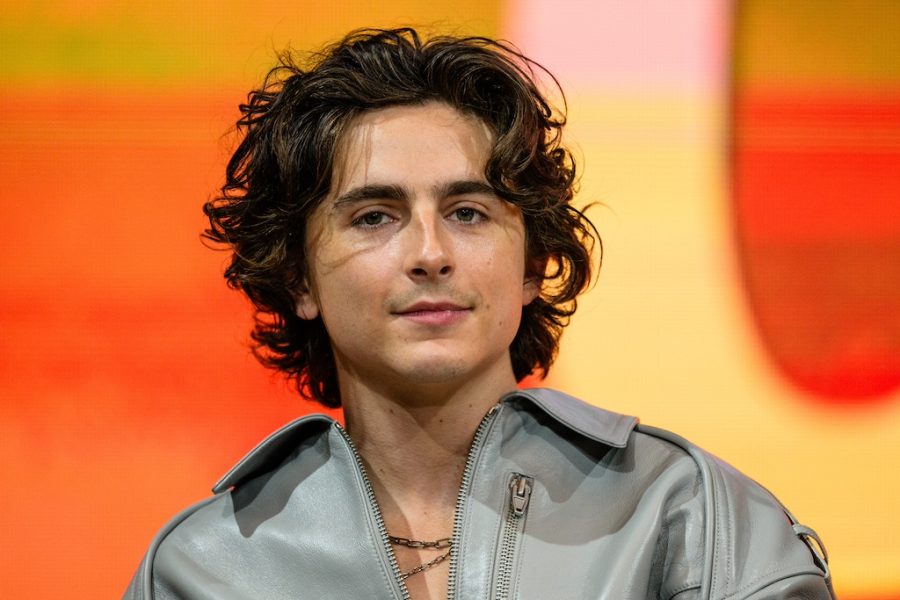
Timothée Chalamet was one of the more discussed Oscars snubs this week. For months since the film’s release, critics have celebrated his performance in Marty Supreme as the work of a young actor well on his way to greatness. Chalamet pulled out all the stops both in promoting the film as well as spearheading its Oscar campaign. The film itself earned stellar reviews and made $180 million worldwide, garnering nine Academy Award nominations. Yet it went home empty-handed.
Despite all this, most of the commentariat claims Chalamet deserves the slight. Not because he wasn’t great in the film but because of his recent comments on opera and ballet.
Chalamet has found himself in hot water thanks to a now-viral interview where he quipped that “no one cares” anymore about those two art forms. The incident is now being cited as one more piece of evidence that the young actor has let fame go to his head.
The comment provoked a string of toothless retorts from celebrities like Whoopi Goldberg and Nathan Lane as well as wounded reactions from people who have been fighting tirelessly to preserve these venerable traditions.
Many jabs at Chalamet focused on his inability to compete with the sheer artistic talent of dancers and singers, while others insisted on the enduring power of classical performing arts.
These objections miss the point. Opera and ballet are in genuine financial and cultural crisis, and anemic celebrity white knighting does little to expand their audience.
Yet far too many of Chalamet’s critics are ignoring the role of public infrastructure in the modern life of the performing arts. Well into the twentieth century, opera and dance preserved their mass appeal even as new paradigms emerged — including film. Especially in Europe, they did so on the back of ambitious state ownership programs and public funding.
The real question isn’t whether anyone cares about opera and ballet — it’s who will pay to keep them alive. What these art forms need isn’t celebrity defenders but a renewed commitment to the kind of ambitious public support that preserved their relevance in the past century.
Taking Shots for No Reason
The controversy with Chalamet began in February when the actor sat down with Matthew McConaughey during the Variety & CNN Town Hall. During the conversation, McConaughey asked Chalamet about whether he feared cinema was dying as a result of declining attention spans.
Chalamet acknowledged the worry, saying, “I don’t want to be working in ballet or opera, or things where it’s like, ‘Hey, keep this thing alive, even though no one cares about this anymore.’”
With a laugh, he quickly tried to add a caveat, remarking, “All respect to the ballet and opera people out there. I just lost fourteen cents in viewership. Damn I just took shots for no reason.”
The drama continued into mid-March, especially after a TikTok post resurfaced a 2019 appearance where Chalamet called opera and ballet dying art forms.
In the last two weeks, there has been a wave of comments from celebrities like Jimmy Kimmel, Juliette Binoche, and Justine Bateman. (Doja Cat also joined the fray, but she later retracted her comments after admitting she’d never seen a live ballet or opera performance.)
Chalamet’s comments additionally elicited responses from performing arts world institutions and personalities, including actor/dancer Zach McNally, former American Ballet Theatre principal dancer Misty Copeland, and New York City Ballet principal dancer Jovani Furlan. Hawaii Opera Theatre and Seattle Opera even introduced discount codes referencing the incident, claiming they brought in additional revenue due to the controversy.
The story became a centerpiece of the recent Academy Awards. Early in his opening monologue, host Conan O’Brien joked, “Security is extremely tight tonight. I’m told there’s concerns about attacks from both the opera and ballet communities.”
When Copeland danced onstage along with members of the Sinners cast performing their hit “I Lied to You,” Chalamet attempted to make amends by giving her an enthusiastic ovation.
But by then, several think pieces were already in the works, with a New York Times op-ed saying that Chalamet’s toxic masculinity betrayed his earlier promise of being a “new kind of leading man.”
A common refrain was that the actor lacks the talent to compete against opera and ballet stars. Furlan’s retort, for example, was accompanied a video demonstration of his staggering technique where he balanced on a BOSU ball, a clear attempt to flex on Chalamet’s comparative lack of physical prowess.
Other critics pointed out Chalamet’s hypocrisy, given that he previously bragged about having a grandmother, mother, and sister who trained in dance. As he claimed, “I’m like a Venn diagram of the best cultural influences of the twenty-first century and twentieth century.”
Still others rejected the basic premise that opera and ballet were culturally irrelevant. While speaking at SXSW last week, director Steven Spielberg insisted that the magic of cinema and concerts were also shared by ballet and opera. Acknowledging the crowd’s laughter, he remarked, “And we want that to be sustained. We want that to go forever.”
Certainly, Chalamet’s comments were boneheaded. But these arguments miss the mark. As one industry insider put it, “Those feigning outrage might start proving their support by posting a photo of the last ticket they actually bought to a ballet or opera performance.”
Indeed, if Spielberg believes so strongly in the transformative magic of music theater, we opera fans would more than welcome his cinematic adaptation of Parsifal.
Art as a Public Good
Still, there’s a deeper issue at stake. Commentators in the discussion often focused on the organic appeal of opera and ballet, their intrinsic merits as art forms.
Doing so ignores the role of public support in driving interest in classical performing arts — and how catastrophic defunding has been for arts organizations.
The data is nothing short of alarming. A 2025 study of US opera during the period from 2005 to 2023 found that box office receipts and private donations have declined even as administrative expenses have grown. Survey data gathered by the National Endowment of the Arts (NEA) also shows a precipitous decline in attendance of both opera and ballet performances since they began collecting data in 1982.
A representative state of affairs is seen in the case of New York’s Metropolitan Opera, which posted their own Chalamet clapback on Instagram. After years of financial challenges, the Met has begun draining its endowment, announced layoffs, and said it was open to selling the two iconic Marc Chagall murals that adorn their grand staircase.
A key factor has been the decline of the limited public funding for the arts. The NEA, an already embattled federal funding agency, has seen a renewed round of defunding during the second Trump presidency, throwing already precarious arts organizations into jeopardy.
Some of Chalamet’s critics questioned the accuracy of his statement by pointing to the relative popularity of opera and ballet in Europe. Surely these traditions enjoy more public support, some of which can be attributed to the civic pride that surrounds these homegrown art forms.
However, what separates the European arts landscape from that of the United States is the higher level of public ownership and funding for art forms like opera and ballet.
Germany, one of the highest per capita spenders on culture, pours significant money into subsidizing art. Many of its most acclaimed ensembles, including the Berlin State Ballet and the Bavarian State Opera, are publicly owned. In fact, a number of such German institutions are former court ensembles that were transformed into public entities after the German Revolution.
A similar situation is seen in France. In 2019, prior to COVID-era audience compression, French opera companies received more than twice as much of their income from government funding as from ticket sales.
This publicly funded model is what makes opera and ballet accessible to everyday people. Thanks to public support, Paris Opera (founded in 1669 by Louis XIV) is able to offer tickets as cheap as €10, including heavily discounted tickets for the young, elderly, and unemployed.
It is these sorts of provisions and institutional models that are decisive for driving public engagement — and they will need to be part of any effort to save opera and ballet from a hypothetical future death.
Art for the People
In the end, interest in the performing arts isn’t about pure intrinsic appeal. And its fate will not be sealed by Chalamet’s comments or his critics’ heroic media interventions.
Culture is defined by shared values and the institutions that make art accessible to ordinary people. Whether art forms live or die is a collective choice, and it should not be left to the whims of the market.
This is actually a lesson that was put on display in 2019 when Emmanuel Macron threatened to take pensions away from Opera Paris’s musicians and dancers — a support system that also began under Louis XIV. These artists went on strike with other public sector workers, fighting to preserve their cultural heritage and their rights as workers. In the end, they won.
Those of us interested in saving the performing arts would do well to head this lesson, recognizing our shared interest with working people — as workers and consumers of art.