At their 2026 organizing conference, Young Democratic Socialists of America focused on organizing student workers, building campus movements against ICE, and preparing mass action for May Day 2028 to confront Trump’s authoritarianism.
Members of the Young Democratic Socialists of America in good standing can follow this link to get a yearlong subscription to Jacobin for just $1.
This year’s Organizing Conference of the Young Democratic Socialists of America (YDSA), which Jacobin cosponsored, quickly sold out, drawing more than four hundred young socialists to the “Rooted in Struggle” gathering — a sign of how far the organization has grown since its humble beginnings as the youth section of the Democratic Socialist Organizing Committee. With its adult counterpart, Democratic Socialists of America, now claiming over one hundred thousand members nationally, the question hanging over the weekend was not whether socialism has a foothold in the United States, but what kind of organization can sustain and deepen the energy and action of a new generation of socialist activists.
The Political Moment
Capitalism’s political legitimacy is in crisis. The post-2008 recovery restored corporate profits more quickly than living standards as governments protected financial markets while administering austerity, pushing the costs of the crash onto the working class. Rather than flowing into productive investment, capital poured into speculative assets and tech monopolies. With states cushioning markets while putting the screws to public spending, center-left parties lost credibility while the socialist left failed to mount a successful alternative. The far right has seized this opening, gaining strength around the world by translating economic insecurity into populist rage.
The far right is attempting to consolidate those gains. Its cultural chauvinisms are not just rhetorical excess but part of a broader project to discipline the working class and remake the state in ways that further entrench elite power. We’re entering a new period of global capitalism marked by instability and an increasingly vicious neocolonial imperialism — visible in regime-change wars in Venezuela and Iran. Antonio Gramsci’s perennially relevant aphorism feels more fitting than ever: “The old world is dying and a new one struggles to be born; now is the time of monsters.”
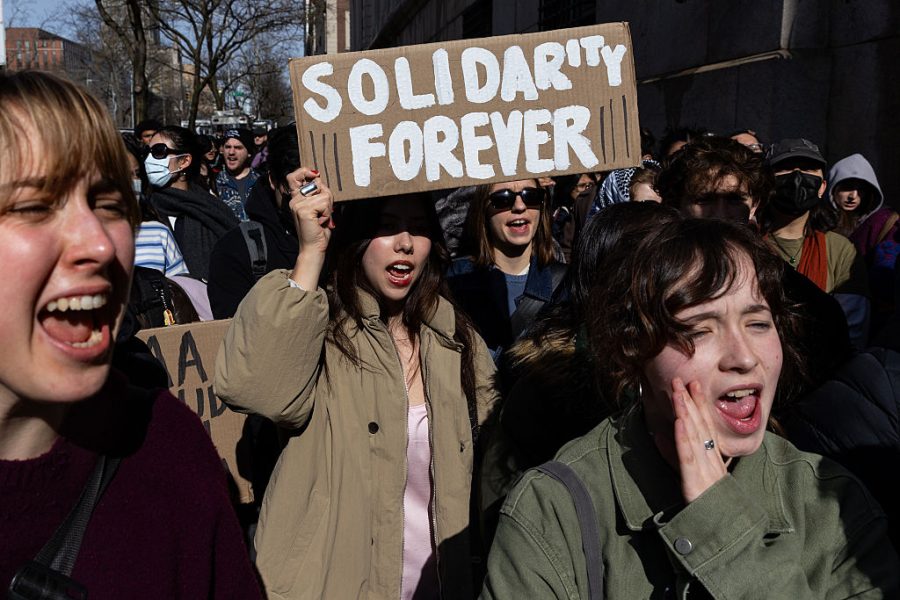
The weakness of the Left and the working class in responding to the far right demands renewed effort and the infusion of energy that youth activists can bring. There are bright spots of resistance in the United States: the mass movement against the genocide in Palestine; the victory of Zohran Mamdani in the New York City mayoral election; the millions in the streets saying “No Kings” to Donald Trump’s authoritarianism; and the victory of Minneapolis against Immigration and Customs Enforcement (ICE).
Young people today give voice to deep indignation — an insistence on fighting back against the feeling that there is no future for them on a burning planet. And this anger is not aimless; it reverberates through the mass movements forming in opposition to Trumpism. This is the political terrain on which socialist activists in the United States are organizing and the occasion to which they must rise.
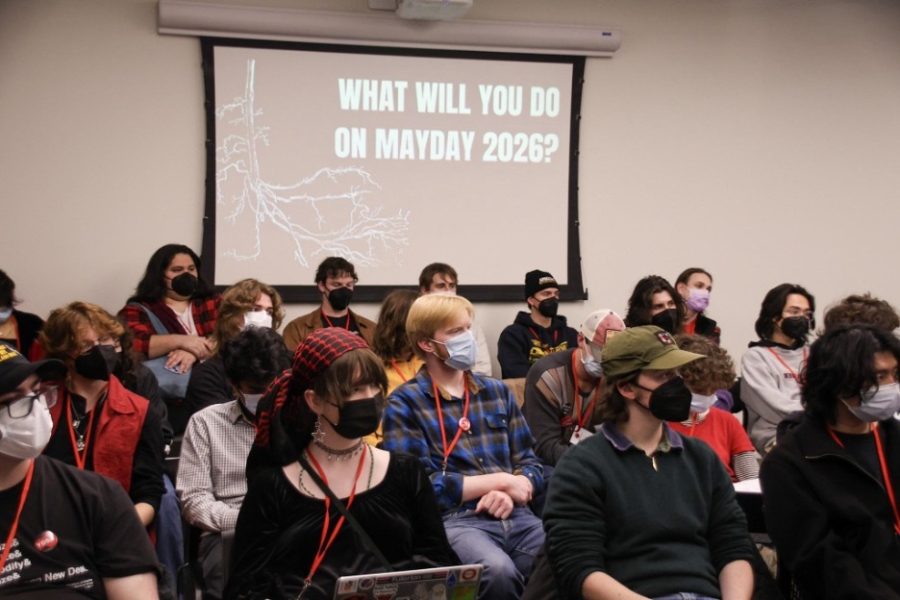
The conference’s main themes included building toward May Day 2028 and fighting ICE through the “Sanctuary Campus” campaign. In his remarks, YDSA’s national cochair Daniel S-C emphasized May Day 2028 as a strategic horizon — a mass mobilization to confront Trump and build a working-class political alternative.
Daniel went on to say, “There are concerns from certain organizers that the mass strike that Shawn Fain and the UAW are calling for will be a dud, nothingburger; if we want it to be somethingburger, we have to start building the foundations now.” The conference has played a significant role in building the enthusiasm and commitment of student activists necessary for disruption and working-class action on a scale not seen in generations. Attendees spent the weekend debating how campus organizing today can prepare students for that kind of mass action and connect them with broad layers of the working class to build a mass strike to defend democracy and create a real political alternative.
One union likely to play a role in this fight is the University of Oregon Student Workers (UAW Local 8121), which represents thousands of student workers across campus. For YDSA members in Oregon, the union has become a central vehicle for struggle and an incubator for the kind of mass politics the moment demands.
Jace Deininger, cochair of University of Oregon YDSA (UOYDSA) and sergeant at arms of UAW 8121, drew a clear difference between symbolic activism and majoritarian organizing. “We will not win socialism by just sitting in a room of only YDSA members,” he said. “We need to think about how we are going to move masses of people into action and gain power.”
That orientation was tested during the 2025 University of Oregon student worker strike. Mae Bracelin, Former UAW 8121 president and a UOYDSA member, explained:
Our strike brought out thousands of workers to fight for immediate improvements to their lives and the lives of their coworkers. Through the power of our union, we won increased wages, sure, but we also won the strongest harassment and discrimination protections of any union on campus. What we did changed the dynamic in every workplace at UO forever.
The strike extended far beyond YDSA’s formal membership and capacity. It required building majority support, developing leaders, and engaging workers who don’t consider themselves socialists. As Deininger put it, “If you put masses of people out to fight for something, you will win.”
A mass strike in 2028 will not materialize because it is declared from a podium, especially not YDSA’s. It will depend on workers who have already experienced collective action, who are prepared to engage with the people who don’t agree with us yet, and who have learned through struggle that solidarity gets the goods. YDSA organizers are hard at work building student worker unions to train and prepare for workplace action on campus and beyond.
Laying the Groundwork
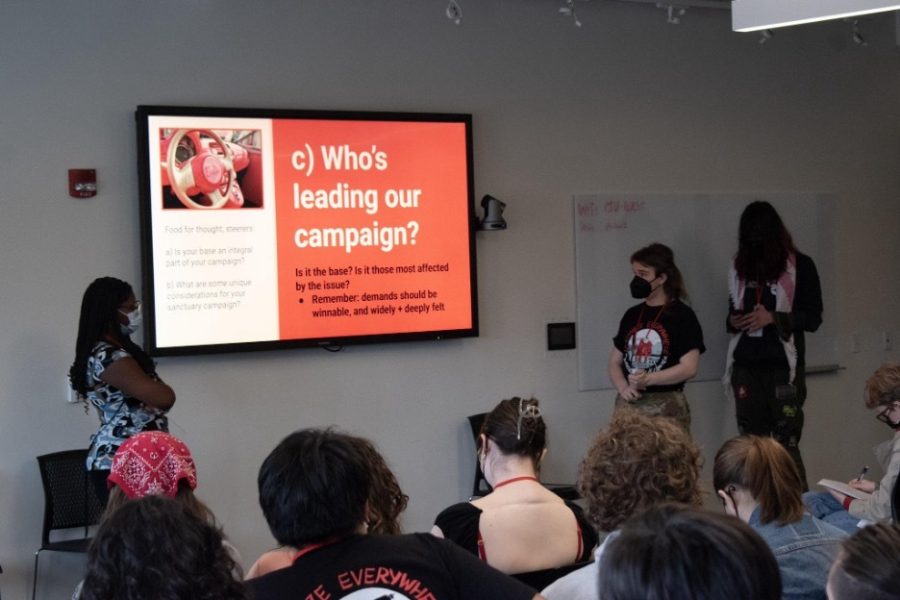
James Hernández, a student organizer at Florida International University (FIU) and a member of YDSA’s National Coordinating Committee, its elected political leadership, called it one of the strongest gatherings yet. Workshops ranged from basic organizing skills to advanced strategy sessions, reflecting a rapidly growing student movement building ties between an older and new generation. Dare Cima of the University of Louisville said her chapter brought more than ten members to exchange ideas and sharpen their organizing.
For Cima, the central task of YDSA is not just recruitment, but building the next generation of class warriors who are in it for the long haul. “YDSA’s job is to train socialists on campus and create a pipeline into DSA” she said. “We should be preparing members to enter strategic sectors of the labor movement after college. That means encouraging people to become teachers, nurses, engineers, logistics workers, and preparing them to organize in those fields.”
That emphasis on the rank-and-file strategy showed up throughout the weekend. Gerica Noerdinger, cochair of YDSA’s Youth Labor Committee, noted that more than 65 percent of the four hundred attendees signed pledges to “industrialize” in key industries after graduation. Deininger noted that this strategy — to build lifelong socialist labor organizers — is strengthened by the priority YDSA places on student worker organizing on campus, which serves as a valuable training ground for future militants before entering their long-term careers.
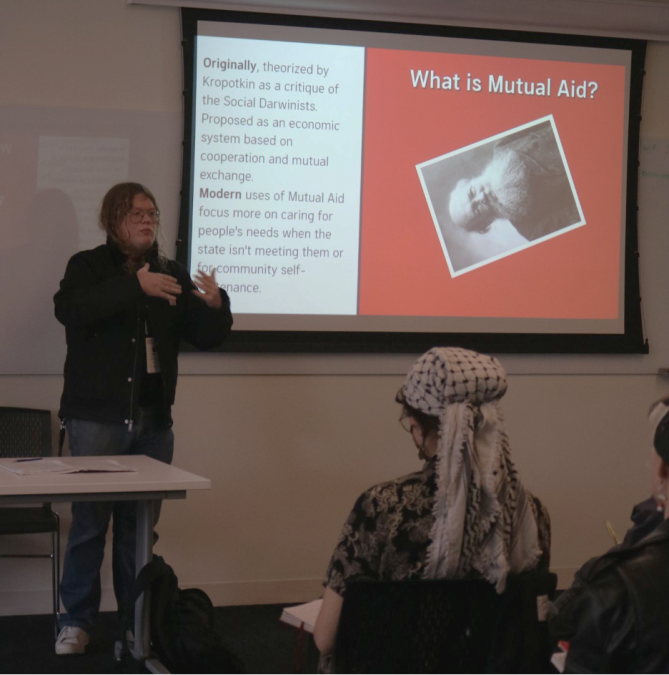
A conference workshop titled “Mutual Aid That Builds Working Class Power” argued that mutual aid must be tied to broader campaigns that build pressure on university administrations and the state, rather than treating mutual aid as a stand-alone service project. The goal, as one presenter put it, is not to circulate the same five dollars among ourselves but to use mutual aid to build working-class power and demonstrate that collective struggle can win real demands.
Student socialists are also building working-class power through electoral campaigns. Cima pointed to the election of J. P. Lyninger to Louisville’s Metro Council as evidence that socialists can use public office as a platform to build working-class struggles. Winning elected office alone will not win socialism, she noted, but elected positions can amplify organizing, expand what feels politically possible, and connect institutional power to movement pressure outside of the state.
Students from New York City who organized with the Zohran Mamdani campaign shared their lessons with their comrades at the conference. Sebastian Leon-Martinez, NYC YDSA coordinator, framed electoral work as a site of political education. “The goal was demonstrating that the skills we build in electoral work are transferable to other organizing,” they said. “We build leaders. We learn how to hold persuasive conversations. We develop strong relationships.”
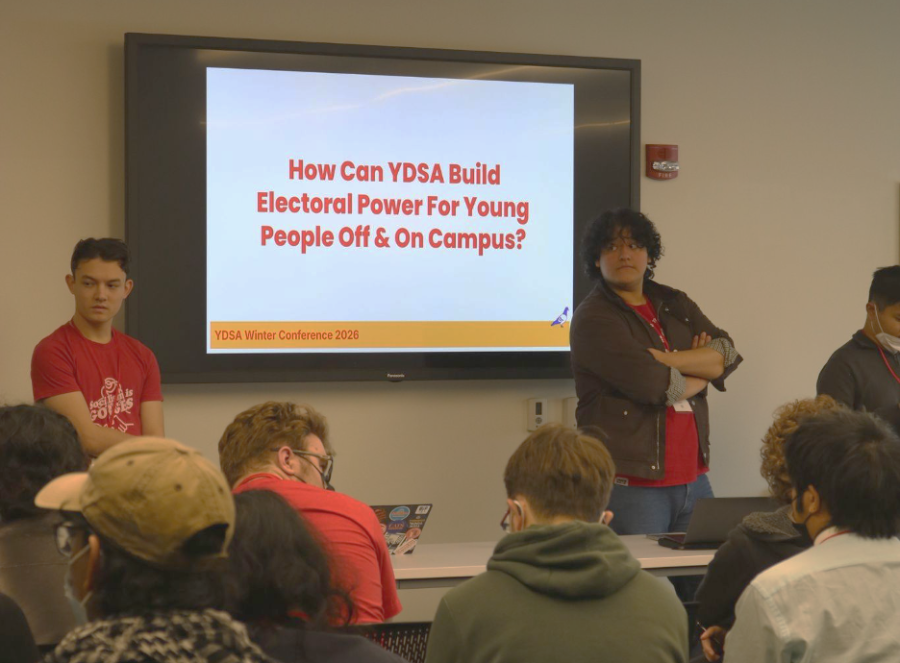
For Leon-Martinez, campaigns like that of Mamdani function as entry points into socialist politics and movement organizing. The task for YDSA is not simply to celebrate these moments, but to translate the skills and relationships built in electoral work into other forms of struggle. The same skills used to persuade a voter can be used to organize coworkers. The same leadership development built into field operations can strengthen labor campaigns, campus fights, and chapter capacity. In this way, Electoral and workplace organizing need not be separate tracks, but mutually reinforcing arenas of political development.
Indeed, this sort of reciprocity is already visible. “We see in areas like Vermont and Ithaca that YDSAers themselves are running for office because there is this profound gap in local leadership, and because YDSAers can lead in the local communities,” Leon-Martinez said.
Beyond the Campus Gates
Conference attendees reflected on how their fights extend beyond borders, workplaces, and campuses. An international ecosocialist exchange connected YDSA members with student organizers from Juntos, a student movement in Brazil. Placing May Day 2028 in a global perspective, James Hernández of FIU emphasized that “internationalism cannot just be symbolic. We need a long-term strategy. One horizon we discussed is May Day 2028, organizing youth internationally around coordinated anti-fascist action. That means building real rank-and-file relationships across borders.”
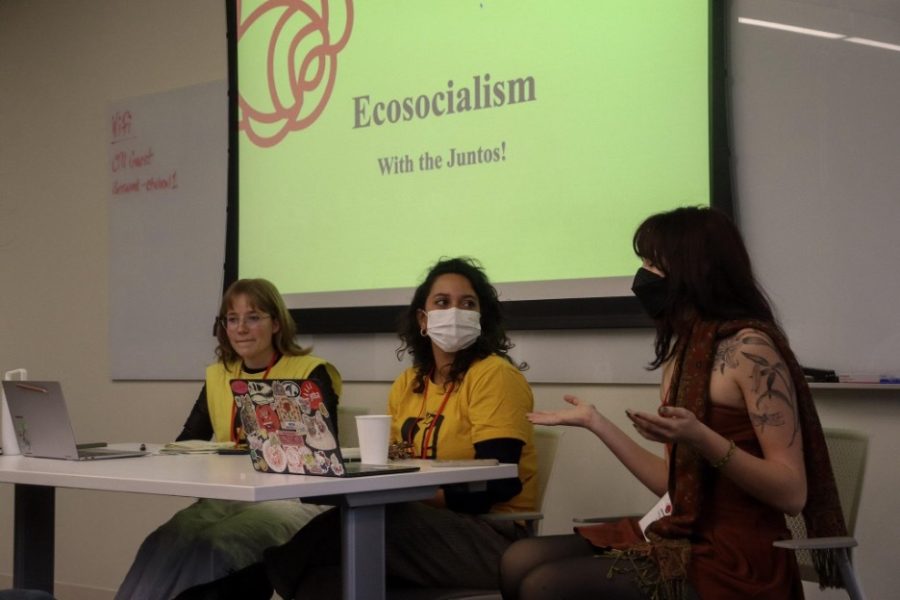
The emphasis on member-to-member relationships was deliberate. If 2028 is to represent a convergence of left and working class movements, it cannot be confined to one country or negotiated among leadership alone. It will depend on sustained, bottom-up relationships between workers and organizers across national boundaries. Júlia, a leader in Juntos and Brazil’s National Union of Students, underscored the stakes: “Trump is dangerous not only to the United States, but to the whole world. He is a central part of an international fascist network. It is in our interest as an organization of socialists to advance a mass mobilization against Trump and the far right.”
Turning from international coordination to the situation in the United States, discussions centered on repression. Members discussed YDSA’s resistance to the deportation machine. In places like Florida and Oregon, campus police cooperation with federal immigration enforcement has made ICE an immediate presence rather than an abstraction. As one organizer noted, “The far right has grown, repression is real, but so is resistance.”
For several chapters, the national Sanctuary Campus Campaign has become a concrete test of whether YDSA can meet the moment and channel student anger at ICE’s violence into sustained mobilization and durable organization. Participants shared lessons from campaigns that pressured university administrations to limit cooperation with federal authorities and debated how to escalate organizing under hostile conditions.
YDSA can’t defeat ICE alone, and neither can students. Stopping ICE deportations will require a mass movement anchored in multiracial working-class coalitions. YDSA’s role is to foster and train organizers, strengthen these coalitions, and link student movements with the broader power of organized labor — building toward May Day 2028 alongside a growing anti-fascist labor front.
The Culture
Several members — inside, outside, and adjacent to the youth wing — have acknowledged a pervasive culture of sectarianism within the organization. Compared to their counterparts in the “adult wing,” YDSA chapters often consist of smaller groups of young activists with a deeper sense of urgency to achieve something in our finite time on campus. Student socialists have to navigate the tension between building their own organizations and participating in the broader mass processes capable of reshaping politics.
Deininger noted that over the past few years, he has seen a “push and pull” between chapters that orient toward moving masses into action and those that become overly focused on internal alignment or claiming exclusive credit for victories. A mass organization, he suggested, cannot afford to collapse into sectarian habits. Its strength is measured not by how tight its circle is, but by how many people it can bring into struggle. He went on to note how, in his chapter, “YDSA politics really coalesced during the encampments. It was the moment when I understood what set YDSA apart from all the other orgs was the commitment to democratic decision-making. It was us alongside a bunch of ultra-lefty anarchist-type orgs, SJP [Students for Justice in Palestine], and an anarchist magazine group.”
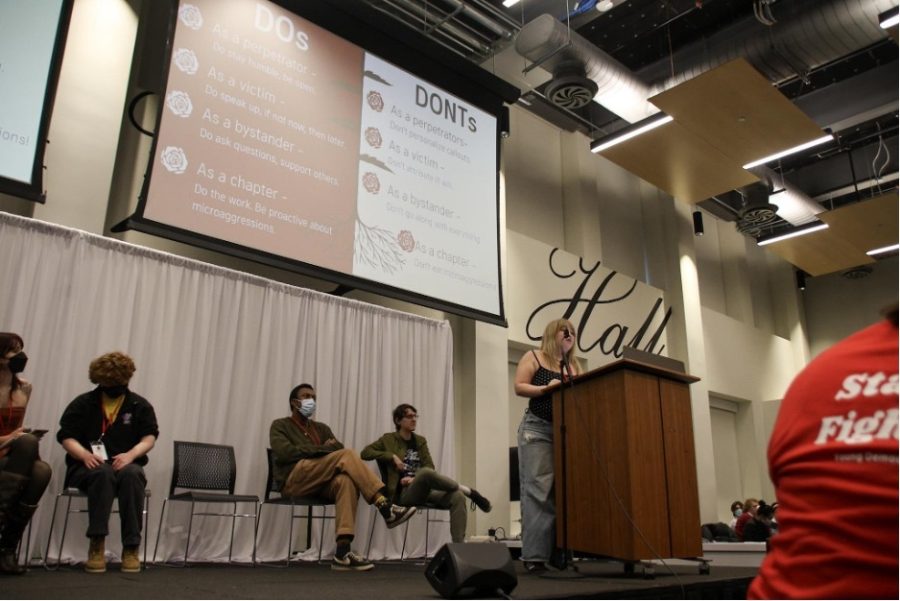
That outward facing orientation shaped one of the most discussed sessions of the weekend: the plenary hosted by the recently chartered Chapter Health and Intersectionality Committee (CHIC). In past years, questions of diversity, equity, and inclusion were sidelined as a topic for smaller breakout sessions or omitted from the conference program entirely. This year, it was placed as a conference-wide plenary. Rather than treating diversity as a branding question, organizers framed it as a question of capacity. A movement that claims to represent the multiracial working class must actually embody it.
Jamie from Oakland University described the plenary as a deliberate intervention into how YDSA chapters operate day to day. “It was focused on making chapters more accessible, bringing up the culture, and establishing why microaggressions are important to address,” she said. “It seems so minor, but it’s built into our organizing. Because if we can’t even hold each other accountable for the little things we do, there’s no way we’re going to be able to do it for the whole working class.” Likely the most important lesson from this plenary was the message to “touch grass” — outward-facing organizing matters much more than insular self-reflection. As one activist put it, a movement rooted in broad class struggle “will develop far more BIPOC comrades than the wokest sectarian.”
The response was immediate. “A ton of people came up afterward and said it was one of the best plenaries they’d ever experienced,” Jamie noted. “It is very inspiring to see how diverse the crowd was even now. Because even from last year, there have been major improvements — especially with how diverse the new leadership is and how diverse new leadership is looking to be.” This shift reflects what some organizers have begun calling “Woke 2.0”: a renewed focus on fighting social oppression but rooted in mass organizing rather than individualized virtue signaling.
If 2028 is to mark a moment of heightened working-class consciousness, YDSA will need to be capable of organizing that class in all its glory. Rejecting sectarianism and addressing interpersonal dynamics are not distractions from strategy, they are necessary conditions for building a genuinely mass organization. Culture, in this sense, is not peripheral to the fight ahead.
The Fight Ahead
If there was a through line to the weekend, it was maturity — perhaps an ironic development for DSA’s “youth-wing.” YDSA is no longer just a loose network of campus reading groups or an appendage to its parent organization. Young socialists are training lifelong organizers, building durable institutions capable of challenging power, and connecting campus struggles to broader fights of the working class.
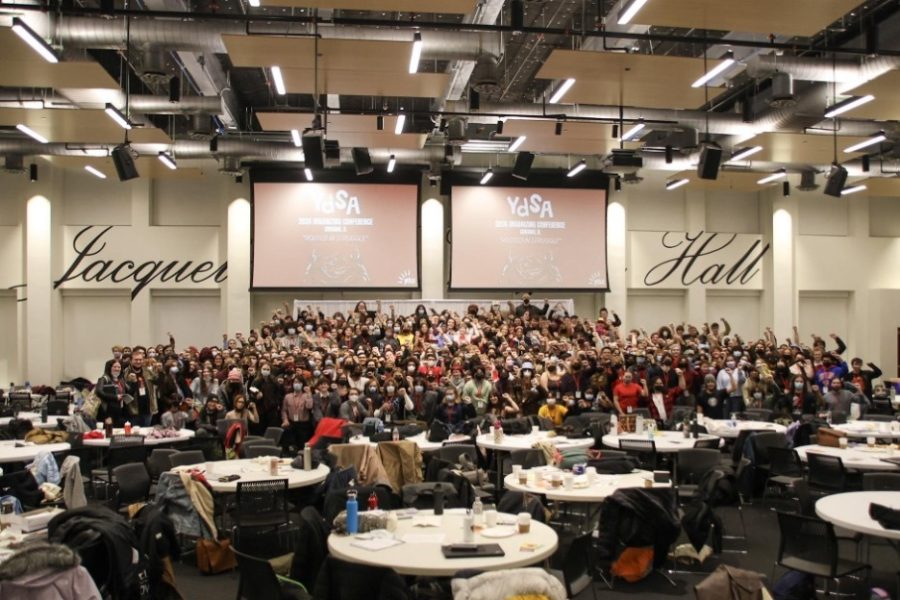
Through important experiences in the student movement — from the encampments to anti-ICE work today — activists are learning how to seize opportunities where they arise, build serious campaigns, and bring more people into the movement.
Sebastian Leon-Martinez offered a mix of pride and self-critique. Reflecting on NYC-YDSA’s work during Zohran’s primary campaign, they admitted, “We could have started building the infrastructure much earlier [in the primary].” The chapter gained dozens of members, but only after recognizing the scale of the opportunity. “We eventually met the moment,” they said, “but like any growing group, we stumble and then develop a stronger project out of it.”
To carry the student movement forward, student socialists can bridge the patient work of developing organizers and leaders with the urgency of the present — meeting the masses where they are, whether out in the streets fighting Trump or walking out of class to protest ICE. An annual gathering of hundreds of socialists is not just perfunctory routine, it is a strategic opportunity to assess the crisis at hand and strengthen the resistance needed to meet it.